
 Aksh
Aksh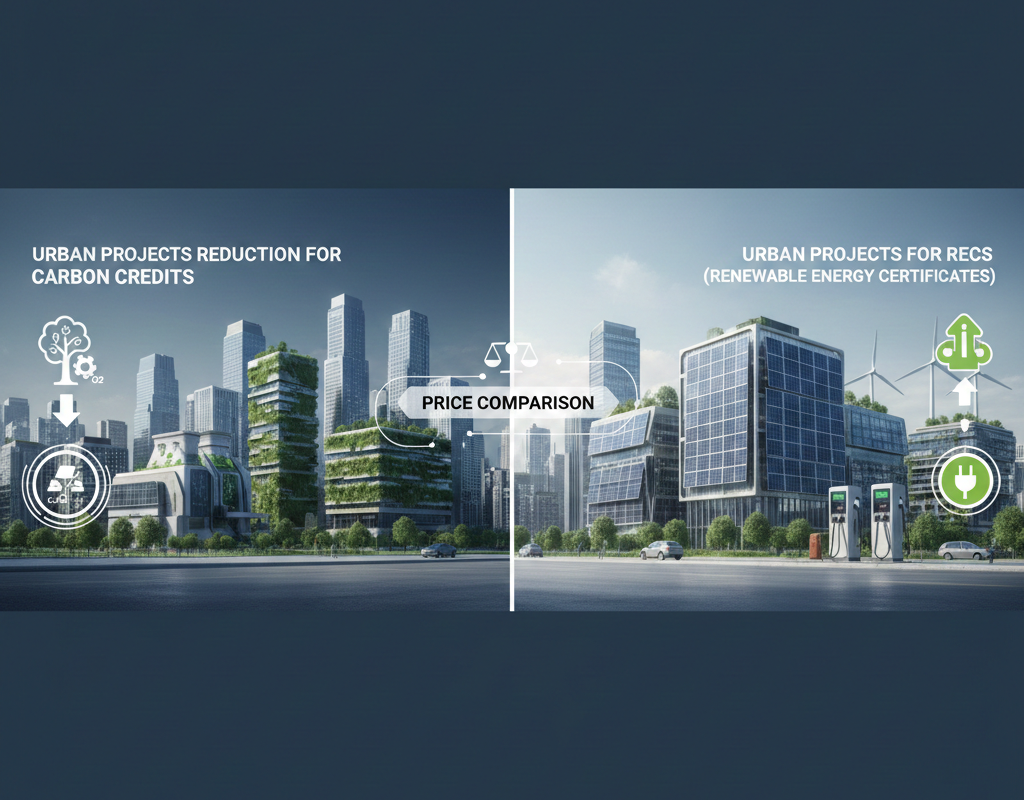
Urban Sustainability Projects in India
Urban Sustainability Projects in India
India’s fast urbanization is changing the country’s economy and making environmental problems worse at the same time. Sustainable urban development is more important than ever because of developing infrastructure projects, growing cities, and rising energy demand. As cities, companies, and institutions move toward cleaner energy systems, carbon markets are becoming increasingly potent financial instruments. Renewable Energy Certificates (RECs) and carbon credits are two of the most talked-about tools in this field.
Although both methods promote climate action and environmental sustainability, they function differently, have different regulatory goals, and are applicable to various kinds of projects. Companies, governments, developers, and investors looking to efficiently take advantage of environmental markets must comprehend the differences between carbon credits and renewable energy certificates.

The Urban Climate Challenge in India
Over the next few decades, hundreds of millions more people are expected to live in India’s cities. At previously unheard-of rates, cities like Mumbai, Delhi, Bengaluru, Hyderabad, and Pune are growing their housing, transportation, and industrial capacities. A large amount of greenhouse gas emissions originate from urban areas because of:
- Use of electricity
- Networks of transportation
- Real estate development and construction
- Systems for managing waste
- Clusters of industries inside city borders
India must include carbon reduction methods into urban development plans in order to fulfill its climate pledges under the Paris Agreement and achieve its net-zero goals. Mechanisms to finance, reward, and verify emission reductions are provided by financial products like carbon credits and RECs.
Key Distinctions Between Carbon Credits and RECs
Although both processes help achieve environmental goals, their scope, measurement, and application are very different.
1 Unit of Measurement
- Metric tons of CO₂ equivalent that are avoided or reduced are used to calculate carbon credits.
- Megawatt-hours of renewable electricity generated are measured in RECs.
- Environmental Goal
- Carbon Credits: Concentrate on cutting or eliminating emissions of greenhouse gases.
- RECs: Concentrate on encouraging the production of renewable electricity.
- Type of Market
- Carbon Credits: Participate in compliance and voluntary markets.
- RECs: Mainly operate inside frameworks for regulated renewable purchases.
- Usefulness
- Carbon credits are applicable to a variety of projects, such as waste management, transportation, forestry, and industrial efficiency.
- RECs: Exclusive to initiatives that generate renewable energy.
Why Both Are Important for Urban Developers to Know
Municipal corporations, real estate companies, and developers of urban infrastructure frequently mix up carbon credits and RECs. However, several revenue streams can be unlocked by the smart combination of both mechanisms.
For instance:
When rooftop solar panels are installed on a commercial building, they may produce:
- RECs for the production of renewable energy
- Carbon credits if emissions reduction is accurately measured and confirmed using frameworks that qualify.
Likewise, a proposal to expand metro rail could:
- Cut down on emissions when driving a private vehicle
- Create carbon credits using transportation-related techniques.
To maximize the value of environmental assets and prevent double counting, it is crucial to comprehend the eligibility requirements.
Carbon Credits’ Economic Advantages for Urban Projects
- A New Source of Income
Carbon credits can be sold in voluntary or compliance markets by projects that lower emissions.
- Better ESG Results
Businesses raise their sustainability scores and draw in climate-conscious investors.
- Mitigation of Risk
Businesses that implement carbon reduction initiatives early on are shielded from further regulatory tightening.
- A competitive edge
Stakeholder trust and public perception are enhanced by sustainable branding.
The Development of the Carbon Market in India
India is taking steps to create a regulated national carbon exchange. The creation of a Carbon Credit Trading Scheme (CCTS) is made possible by the Energy Conservation (Amendment) Act and will:
- Establish benchmarks for emission intensity.
- Give credit to organizations that qualify.
- Encourage open and honest commerce
Future compliance markets are expected to involve manufacturing clusters, power plants, refineries, and urban industries.
India’s Carbon Markets’ Future
The shift to clean energy in India is quickening. Green hydrogen projects, wind energy projects, and solar capacity are all growing quickly. Urban regions are evolving into climate innovation laboratories.
Future developments include:
- Carbon registries that are digital
- Blockchain-powered tracking
- Foreign investment in Indian carbon initiatives has increased.
- Including carbon pricing in the funding of infrastructure
Transparency and consistency will boost investor trust as regulations develop.
In conclusion: Urban Sustainability Projects in India
India’s urbanization offers both remarkable opportunities and environmental risks. Carbon credits and Renewable Energy Certificates are effective market-based tools that help businesses and localities balance climate responsibility with economic prosperity.
It is not just a regulatory task to comprehend the distinction between carbon credits and RECs; it is a strategic necessity for developers, legislators, investors, and businesses forming India’s low-carbon future.
Through the use of waste-to-energy technologies, energy efficiency strategies, renewable energy systems, and sustainable mobility, urban projects can generate substantial financial and environmental benefits.
The next wave of sustainable urban development will be led by stakeholders who proactively incorporate carbon finance into project design as India fortifies its carbon trading ecosystem and renewable energy regulations.