
 Aksh
Aksh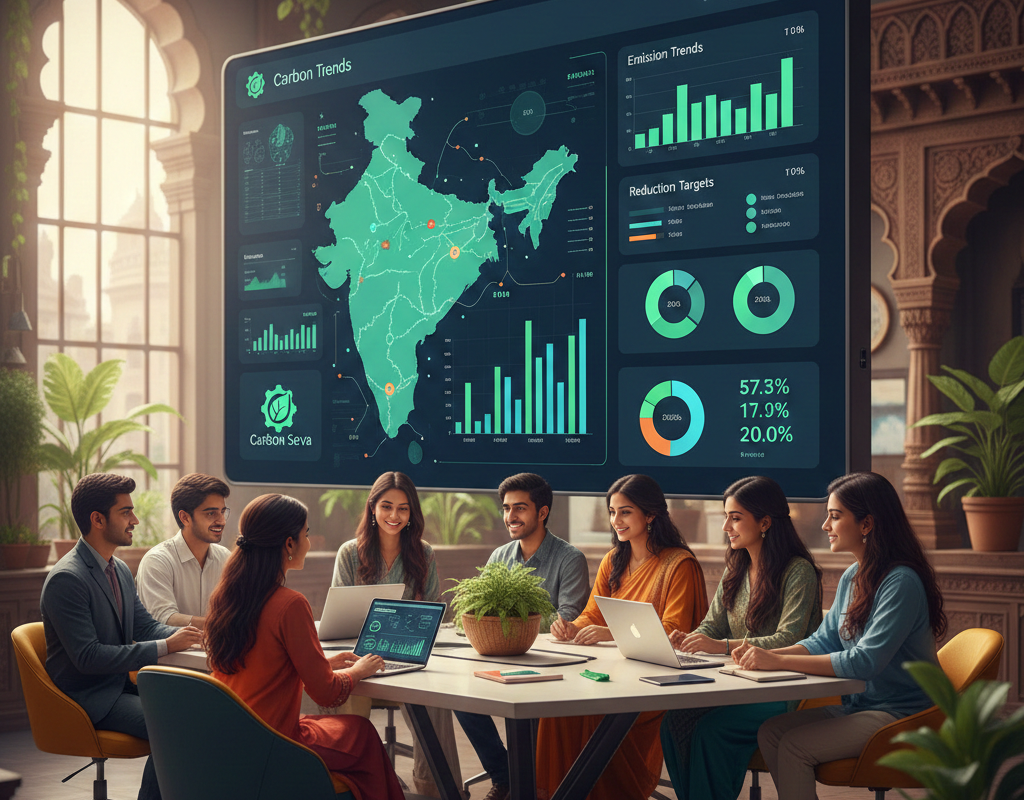
Carbon Tracking Software in India 2026
Carbon Tracking Software in India 2026
India is at a turning point in climate technologies in 2026. Carbon tracking software is becoming a vital tool in the toolbox of business compliance, climate action, and strategic planning as sustainability targets gain traction nationally and across industries. Platforms for carbon tracking and emissions management are now essential to how businesses function in the low-carbon economy since Indian companies, government entities, and investors place a high priority on quantifiable environmental performance.

Important Carbon Tracking Software Features
Let’s examine the characteristics of successful carbon tracking solutions and why they are important for Indian businesses:
- Automation & Data Integration
Disparate data sources, including energy bills, fuel consumption logs, production records, travel data, and more, present one of the largest obstacles to measuring emissions. Carbon tracking software reduces human error and saves time by automating data flows through integration with enterprise systems.
- Engines for Calculating Emissions
Internationally accepted emissions factors and computation techniques are used on these platforms. Frequently, they offer results in CO₂e (carbon dioxide equivalent) terms after converting raw data into equivalent carbon dioxide emissions. Credibility and comparability are made possible by this standardization.
- Dashboards & Visualization in Real Time
Executives and sustainability teams can easily comprehend performance with the use of visualization tools. Hotspots and target progress are shown with the aid of charts, heatmaps, and emissions patterns.
- Forecasting and Scenario Modeling
Prominent solutions enable firms to model emissions under various operational or policy scenarios by providing predictive capabilities. Planning and investment decisions are aided by this.
Adoption of Carbon Tracking Software in Indian Sectors
Carbon tracking technologies are being quickly adopted by a number of Indian industries as a result of commercial incentives, regulatory pressures, or sustainability objectives. Let’s examine a few of the main sectors:
- Power and Utility
A key component of India’s decarbonization initiatives is the energy sector. When integrating renewable energy sources with legacy fossil fuel infrastructure, power producers and grid operators utilize tracking systems to measure emissions from generating assets.
- Logistics & Transportation
Carbon footprints are largely caused by emissions from freight, fleets, and logistics activities. These businesses use tracking software to measure effects and create efficiency enhancements, such as cutting fuel use and improving routes.
- IT & Services
Even though direct emissions are lower in services organizations, Scope 2 and Scope 3 emissions—particularly those related to travel and energy use in offices and data centers—remain substantial. These businesses can monitor their impact and provide dependable reports to investors and clients thanks to software solutions.
- Food Technology & Agriculture
In India, agriculture continues to be a significant source of greenhouse gas emissions. In this industry, carbon tracking aids in measuring emissions from supply chains, livestock, fertilizers, and land use, resulting in actionable changes and incentives for carbon sequestration.
Adoption Challenges for Carbon Tracking
In the Indian setting, adoption is difficult despite the obvious advantages:
- Quality and Availability of Data
Reliable data is necessary for accurate emissions measurement. Manual tracking methods, inconsistent formats, and incomplete information are problems for many businesses. Meaningful carbon tracking frequently requires digitizing data collecting.
- Raising Awareness and Building Capacity
Emissions science and carbon accounting are specialized disciplines. Effective use of tracking systems might be challenging for some companies due to a lack of internal expertise. It is still essential to train and upskill sustainability teams.
- Resource and Cost Limitations
Purchasing carbon tracking systems may seem like an expensive investment for small and medium-sized businesses (SMEs). Scalable platforms and reasonable price structures are necessary for wider adoption in a variety of industries.
Future Developments in Indian Carbon Tracking Software
A number of trends are influencing how carbon tracking may develop in India as climate technology advances:
- Predictive analytics and AI
The use of artificial intelligence (AI) in anomaly detection, emissions forecasting, and optimization insights will increase. Operational decarbonization initiatives can be guided by astute recommendations based on patterns.
- Transparency with Blockchain
By producing unchangeable records and lowering the possibility of double counting, blockchain and distributed ledger technologies may improve the validity of emissions statistics and carbon credit tracking.
- IoT integration
More detailed real-time emissions data will be made available by Internet of Things (IoT) devices, such as sensors, smart meters, and connected equipment. This will allow for automatic controls and dynamic tracking.
How Companies Should Go About Implementing Carbon Tracking?
Investing in carbon tracking software is a calculated move. This is a useful route map for businesses:
- Clearly define your goals
Specify your objectives, such as cost savings, carbon credit participation, compliance, or net zero goal setting.
- Digitize and Clean Data Sources
Ensure that energy usage, fuel records, production metrics, and other relevant data are digitized and accessible.
- Pick the Correct Software
Assess solutions according to their scalability, support for reporting standards, data integration capabilities, and industry alignment.
- Strengthen Sustainability Groups
Spend money on training so that groups know how to analyze data and take appropriate action.
- Incorporate Monitoring into Business Plans
Include emissions targets in executive decision-making, project planning, and operational KPIs.
Conclusion: Carbon Tracking Software in India 2026
Software for detecting carbon emissions is quickly taking center stage in India’s climate. The capacity to measure and control emissions promotes compliance, operational effectiveness, and strategic expansion for both large corporations and agile startups. As climate commitments deepen and markets reward transparency, carbon tracking tools will define competitive advantage in the low-carbon era.
In a world where market success is increasingly shaped by climate performance, using carbon tracking software is not only an environmental necessity for Indian enterprises, but also a commercial strategy that fosters resilience, innovation, and value creation.
Carbon Credit Price Market Trends 2026: Insights, Analysis, and Future Forecasts
Carbon Credit Price Market Trends 2026: Insights, Analysis, and Future Forecasts