
 Aksh
Aksh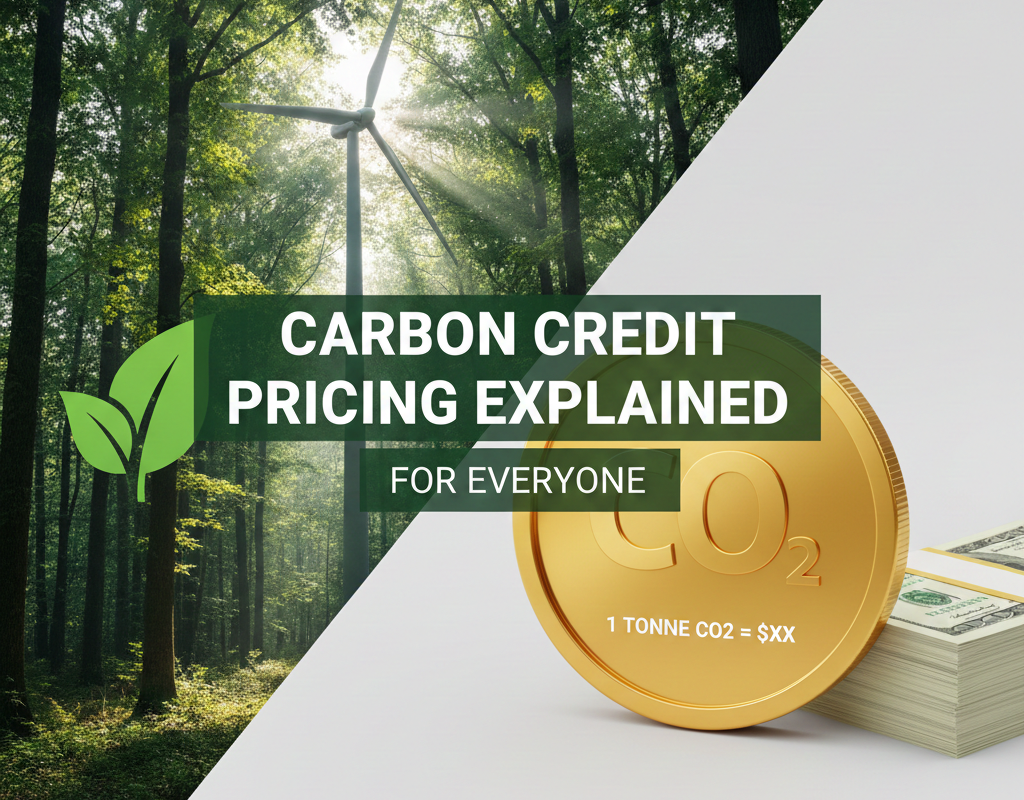
Carbon Credit Price Explained for Everyone
Carbon Credit Price Explained for Everyone
Climate change has evolved from a remote environmental issue to one of the most urgent issues facing the world economy. Globally, governments, corporations, and financial institutions are attempting to lower greenhouse gas emissions without sacrificing economic expansion. The carbon credit system is one of the most crucial instruments in this endeavor. However, the idea of the price of carbon credits is still unclear to many people.
What factors affect a carbon credit’s value? What causes price fluctuations? What is the process of carbon trading in India and around the world? Most significantly, why is the price of carbon credits essential to both individuals and businesses?

A Carbon Credit: What Is It?
One metric ton of carbon dioxide (CO₂) or its equivalent greenhouse gas that has been decreased, eliminated, or prevented from entering the atmosphere is represented by a carbon credit.
To put it simply:
- A corporation receives one carbon credit for every ton of emissions it reduces.
- Another business can buy carbon credits to make up the difference if it exceeds its emission restrictions.
Reducing emissions has a monetary value thanks to carbon credits. They make environmental stewardship a quantifiable and exchangeable commodity.
How Much Does a Carbon Credit Cost?
The monetary value attributed to a single carbon credit (one ton of CO₂ equivalent) is known as the carbon credit price. The type of market, supply and demand, project quality, location, and regulatory environment all affect this pricing.
The cost of carbon credits is not set. Like stocks or commodities, they vary based on:
- Policies of the government
- Corporate pledges to be sustainable
- Goals for reducing emissions
- Demand in the market
- Credibility of the project
It is necessary to comprehend the functioning of carbon markets in order to comprehend the pricing of carbon credits.
Global Average Prices for Carbon Credits
Prices for carbon credits differ significantly between markets.
- Markets for compliance are frequently much higher.
- The quality of the project affects voluntary market prices.
- The price of premium nature-based carbon credits can be significantly higher.
Stricter climate regulations have caused carbon prices in regulated Europan markets to surpass notable thresholds in recent years.
In the upcoming years, it is anticipated that India’s developing carbon trading framework will establish organized price discovery processes.
The cost of carbon credits in India
India has one of the fastest-growing markets for renewable energy and is one of the biggest emitters of greenhouse gases in the world.
To create a legal carbon market system, the Indian government has taken the first steps. It is anticipated that pricing transparency and liquidity will increase with the implementation of structured carbon trading platforms.
Important factors influencing the cost of carbon credits in India are:
- Growth of renewable energy
- Enhancements in industrial energy efficiency
- Rules set out by the government
- Requirements for export markets
- ESG pledges made by corporations
Because of its enormous potential for afforestation and renewable energy, India is well-positioned to become a significant provider of carbon credits as customers around the world look for more affordable options.
What Causes Price Changes for Carbon Credits?
Prices for carbon credits vary for a number of reasons:
- Modifications to Policy
Pricing can be significantly impacted by government climate policy. Tighter pollution limits raise demand, which drives up costs.
- Economic Situation
Industrial production declines during economic downturns, which lowers emissions and credit demand.
- Commitments to the Corporate Climate
Demand rises when big businesses declare net-zero targets, which raises voluntary market prices.
- Speculation in the Market
Short-term price volatility can be influenced by investors who trade carbon credits as financial assets.
Carbon Credits as a Financial Instrument
More and more people are considering carbon credits as alternative investment options.
Carbon funds and institutional investors buy credits in anticipation of future price hikes brought on by stricter climate legislation.
Because carbon markets are impacted by geopolitical and regulatory changes, they are frequently compared to commodity markets like those for metals or oil.
In conclusion: Carbon Credit Price Explained for Everyone
The price of carbon credits is more than just a figure; it’s a measure of the monetary worth of environmental stewardship. It reflects market dynamics, business ambition, regulatory strength, and global climate pledges.
In an increasingly carbon-constrained world, knowing how carbon credit pricing operates enables investors, companies, and individuals to make wise decisions.
The future of sustainable development will be greatly influenced by the cost of carbon credits as India fortifies its carbon market framework and the demand for verifiable emission reductions rises globally.
Carbon markets are emerging as a key component of the global economy and are no longer a marginal idea. And navigating the green transition of tomorrow requires a grasp of the price of carbon credits today.
Carbon Credit Price Market Trends 2026: Insights, Analysis, and Future Forecasts
Carbon Credit Price Market Trends 2026: Insights, Analysis, and Future Forecasts