
 Aksh
Aksh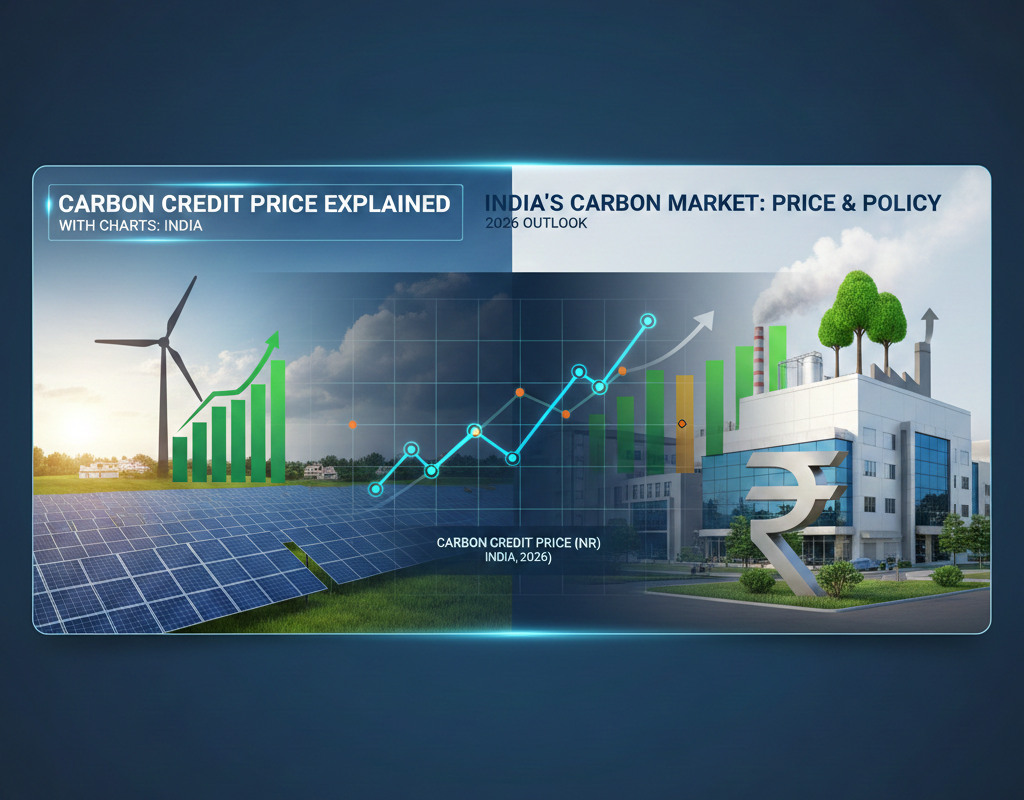
Carbon Credit Price Explained in India
Carbon Credit Price Explained in India
Carbon pricing and carbon credits have become important economic tools as a result of the worldwide emphasis on mitigating climate change. For companies, investors, farmers, policymakers, and environmental stakeholders, knowing the carbon credit price is essential in India, an economy that is expanding quickly and has rising energy demands. The basics of carbon credit pricing in India are explained in this article, along with market patterns, major factors influencing price changes, a comparison of voluntary and compliance markets, and forecasts for the future.
The reduction of one metric ton of carbon dioxide equivalent (CO2e) or the elimination of greenhouse gases (GHGs) from the atmosphere are represented by carbon credits, which are tradable certifications.

Overview: India’s Changing Position in the Carbon Market
India is now a major player in international climate finance systems. There are many Clean Development Mechanism (CDM) projects that produce carbon credits, as well as large-scale forestry and renewable energy projects throughout the country. India currently lacks a nationwide compliance carbon trading system, in contrast to California’s and the European Union’s regulated carbon markets. Rather, Indian organizations mostly engage in voluntary markets and innovative domestic programs like Renewable Energy Certificates and Perform, Achieve and Trade (PAT).
The Methods Used to Calculate Carbon Credit Prices
A variety of environmental, regulatory, and economic variables affect the cost of carbon credits. The voluntary market price in India reflects both domestic demand and international trends, even if formal carbon pricing mechanisms are still being developed.
- Dynamics of Supply and Demand
The price of carbon credits is mostly determined by supply and demand. Carbon credits are produced by initiatives that lower emissions, such as investments in renewable energy, landfill methane absorption, and reforestation. Prices may rise due to scarcity as corporate demand for offsetting emissions rises.
- Type and Quality of the Project
The cost of carbon credits varies. Premium prices are paid for high-quality carbon credits, which are defined by their long-term environmental impact and stringent verification requirements. For instance, afforestation project credits with verified carbon standards could cost more than generic credits for renewable energy.
- Standards and Verification
Price is influenced by internationally recognized standards including the Climate Action Reserve, Gold Standard, and Verified Carbon Standard (VCS). In the market, credits that have been rigorously checked frequently command greater premiums.
- Announcements about Regulations
Government initiatives, such as discussions about carbon taxes and climate targets, have long-term effects. Price expectations are influenced by pronouncements regarding upcoming compliance markets or carbon pricing regimes, even in voluntary markets.
The Reasons Behind India’s Increasing Carbon Credit Prices
In the Indian context, a number of important reasons account for the rising trajectory of carbon credit prices:
- Demand for Energy and Economic Growth
Decarbonization is both necessary and expensive in India due to the country’s growing economy and rising energy demand. Demand drives up prices as more businesses try to balance credit purchases with emissions.
- Momentum for Global Net Zero
Global net zero goals must be met by multinational corporations doing business in India. Price inflation and demand are driven by more voluntary market involvement.
- New Regulatory Landscape
Although India does not yet have a fully compliant market, policy signals about cap-and-trade or carbon pricing lead to anticipatory price impacts.
Effects on Indian Industries and Businesses
Numerous industries are significantly impacted by the increase in carbon credit prices.
- The Energy Sector
Sectors that rely on coal are under pressure to either buy credits or cut emissions. Investments in renewable energy are encouraged by rising carbon credit costs.
- Producing
Carbon management is becoming more and more integrated into the financial planning of energy-intensive firms, which has an impact on competitive positioning and product price.
- Forestry and Agriculture
Forestry and soil carbon initiatives produce credits for farmers, opening up new revenue sources and encouraging sustainable practices.
- The Financial Markets
Financial flows into climate action are increasing as carbon credits draw attention from carbon funds and ESG-focused investors.
Pricing Issues for Carbon Credits
Despite encouraging developments, there are still major obstacles to overcome:
- Transparency of Data
Market participants find it more difficult to benchmark fair pricing when there is opacity caused by inconsistent price reporting.
- Costs of Verification
Exorbitant monitoring and verification expenses may limit supply growth and lower project profitability.
- Uncertainty in Regulation
Long-term investments in carbon initiatives may be discouraged in the absence of a defined compliance system.
- Assurance of Quality
Market players need to be on the lookout for credits that compromise environmental integrity and are either inadequately validated or unverified.
Conclusion: Carbon Credit Price Explained in India
The intricate relationship between market demand, environmental integrity, verification requirements, and policy signals is reflected in the price of carbon credits in India. Even though voluntary carbon markets now rule the market, future compliance measures will probably have a big impact on pricing patterns. To make well-informed decisions, companies, investors, and climate campaigners must comprehend these price dynamics.
Carbon credits are a market-driven tool that directs funding toward climate solutions; they are not merely an accounting tool. Future price trajectories will be significantly influenced by factors such as increased participation, robust verification, and transparent pricing as India’s carbon market develops.
Carbon Credit Price Growth Explained: Market Trends, Drivers, and Future Outlook in India
Carbon Credit Price Growth Explained: Market Trends, Drivers, and Future Outlook in India