
 Aksh
Aksh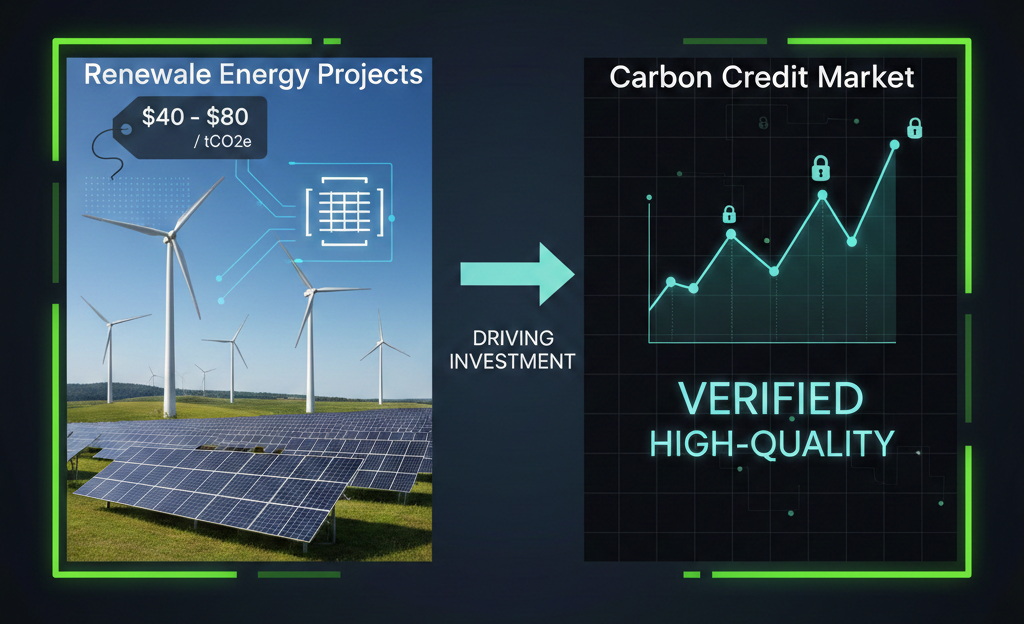
Carbon Credit Price for Renewable Energy
Carbon Credit Price for Renewable Energy
Overview
The importance of carbon markets has increased due to the global movement towards decarbonization and net-zero pledges. Renewable energy carbon credits are one of the fundamental types of carbon credits, allowing project developers of wind, solar, and bioenergy systems to profit from emissions reductions. In contrast to other project categories, the pricing behavior of these credits has displayed clear patterns that are influenced by supply-demand imbalances, regulatory initiatives, market dynamics, and quality requirements.
With an emphasis on India’s expanding carbon market and more general global dynamics influencing pricing for renewable energy carbon credits in 2026 and beyond, we examine the price of carbon credits for renewable energy in this extensive paper.

-
What Are Carbon Credits for Renewable Energy?
One metric ton of carbon dioxide equivalent (CO₂e) that has been prevented, decreased, or eliminated from the atmosphere through approved climate projects is represented by a carbon credit, which is a tradable certificate. These credits are derived from avoided fossil fuel emissions as a result of clean energy output, particularly when they are produced from renewable energy projects like solar farms, wind turbines, biomass plants, and hydropower facilities.
Due to customer preferences, market maturity, and regulatory restrictions, prices for renewable energy credits differ greatly between various marketplaces.
-
Pricing Trends for Renewable Energy Carbon Credits in the Global Market
- Pricing Trends in the Voluntary Carbon Market (VCM)
The voluntary carbon market’s pricing is still very varied on a global basis. According to a recent report on voluntary carbon market prices, renewable energy credits are among the least expensive categories, whereas nature-based credits frequently fetch higher rates. Depending on the project type and quality, the pricing range for all categories shows wide variation, ranging from less than $1 per tonne to more than $100 per tonne.
- Quality and Additionality Standards’ Effect on Price
Market differentiation is fueled by emerging standards like the Core Carbon Principles (CCPs). These exacting standards were not met by a sizable percentage of credits from conventional renewable energy projects, which put pressure on prices and possibly reduced their worth.
-
The Price and Market Dynamics of Renewable Energy Carbon Credits in India
- Current Benchmarks for Domestic Prices
According to statistics from energy research businesses, renewable energy carbon credits have lately traded at record low levels in India; in late 2025, spot assessments showed values as low as 65 cents per metric ton of CO2e. This pricing reflects the ongoing softness of demand in the face of strong supply and selling pressure from inventory.
- Expectations of the Voluntary and Compliance Markets
According to forecasts for 2025–2026, average prices in India’s volunteer sector might be between ₹200 and ₹400 per tonne (around USD 2–5). This would represent continued price repression brought on by oversupply and sluggish corporate demand. But after India’s compliant carbon trading program is put into place, which is anticipated to happen in 2026,
-
Elements Affecting the Cost of Renewable Energy Carbon Credits
- Balance between Supply and Demand
The equilibrium between supply and demand is one of the key factors influencing the price of carbon credits. In India and around the world, the number of renewable energy installations has increased dramatically in recent years, producing a large number of credits. Prices are under pressure to decline because corporate buyer demand has not kept up, particularly for lower-tier, avoidance-based credits.
- Signals from Regulation and Policy
Credit prices are expected to be greatly impacted by policy changes, such as India’s implementation of a formal carbon trading mechanism. In contrast to voluntary markets that depend on corporate sustainability budgets, compliance mandates can raise baseline pricing by generating guaranteed demand from regulated emitters.
-
Comparison of Carbon Credits for Renewable Energy with Other Credit Types
When compared to credits associated with engineering solutions (like direct air capture) or nature-based removals (like reforestation), renewable energy credits frequently command cheaper rates, according to comparative pricing study. Among the causes are:
- Because renewable energy projects frequently proceed without carbon revenue, avoidance credits are viewed as having a lower risk.
- Increased co-benefits, such as biodiversity and community impact, from nature-based projects raise their premium value.
- Regional variations in regulatory recognition force compliance premiums into credits that conform to certain legal systems.
These patterns demonstrate why, while being fundamental, renewable energy carbon credits frequently have lower costs than other credit types.
-
Market Outlook and Price Forecast
- Temporary (2026–2028)
The implementation of compliance trading in India is anticipated to stabilize prices in the near future and possibly raise them above levels seen in the past voluntary market. Compared to sub-$1 rates seen in certain voluntary categories, initial compliance pricing forecasts of about $10 per carbon credit represent a huge increase.
- Long-Term to Medium-Term (2030 and Later)
It is anticipated that the global carbon markets will grow significantly in the future, with carbon credits for renewable energy continuing to play a significant role. According to growth projections, worldwide decarbonization obligations and the expansion of renewable project pipelines might propel the renewable energy carbon credit market alone to surpass tens of billions of dollars by 2030.
In conclusion: Carbon Credit Price for Renewable Energy
As markets develop, regulations grow, and consumers become more quality-conscious, the cost of renewable energy carbon credits keeps changing. Notwithstanding the notable softness of recent price trends, particularly in voluntary markets, the rise of compliance trading programs, stricter integrity requirements, and expanding corporate decarbonization pledges point to a future in which carbon credits for renewable energy will continue to play a crucial role in climate finance.
In a world that is becoming more and more concerned with responsibility, effect, and real emissions reduction, India’s position—with its growing domestic policies and robust renewable energy pipeline—highlights both opportunities and challenges for pricing renewable energy carbon credits.
4 Comments