
 Aksh
Aksh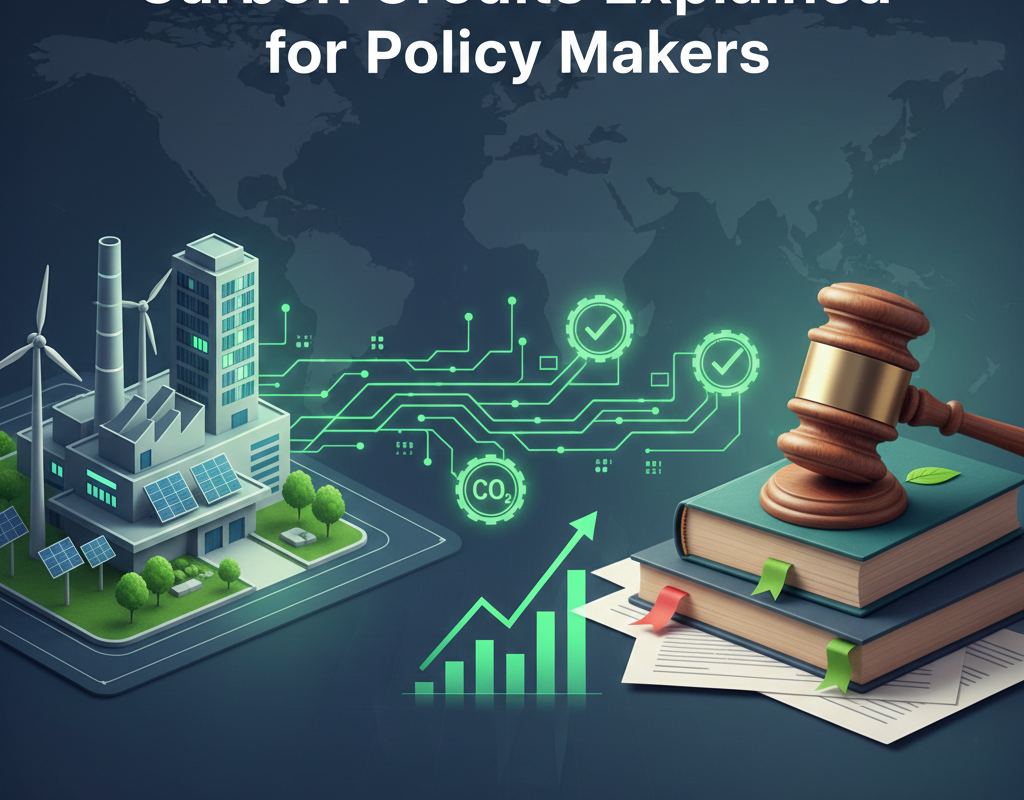
Carbon Markets and Regulatory Frameworks
Carbon Markets and Regulatory Frameworks
Governments, businesses, and policymakers are under increasing pressure to implement practical strategies to cut greenhouse gas emissions as climate change worsens. Among the many options, carbon credits have become a crucial instrument for advancing economic sustainability and climate action. Policymakers tasked with creating environmental rules, promoting sustainable development, and creating climate plans must have a solid understanding of carbon credits.
This page provides a thorough analysis of carbon credits, their operation, and their importance in the creation of policies. In order to give policymakers the information they need to make wise choices, it also addresses the wider ramifications for carbon trading, carbon markets, and climate finance.

Carbon Credits: What Are They?
The right to emit one metric ton of carbon dioxide or an equivalent amount of another greenhouse gas is represented by a tradable certificate or permit known as a carbon credit. In essence, it serves as a measurement tool for attempts to limit or lower emissions. A key component of market-based climate policies are carbon credits, which allow businesses to participate in initiatives that eliminate or drastically cut greenhouse gas emissions.
Two primary program types are the source of carbon credits:
- Governments or international organizations control compliance markets, which mandate that businesses maintain carbon credits equivalent to their emissions.
- Voluntary markets: These let companies, groups, or people buy credits on their own initiative to reduce their carbon impact.
The Operation of Carbon Credits
- The idea behind carbon credits is simple: provide monetary rewards for cutting emissions. The mechanism normally works as follows:
- Establishment of Emission Caps: Governments or regulatory agencies set a limit on the overall amount of emissions that are permitted in an industry or economy.
- Allocation of Carbon Credits: Under the cap, businesses can buy or earn carbon credits that match their allowed emissions.
- Monitoring and Verification: Carbon credits are modified in accordance with emissions, which are tracked.
- Credit trading: Businesses that cut emissions below their allotted quota can sell extra credits, while those who go over the limits have to buy more credits.
- Investment in Carbon Reduction Initiatives: The money raised from the sale of carbon credits can go toward energy efficiency initiatives, reforestation initiatives, or renewable energy projects.
Carbon Credits’ Significance to Policymakers
Understanding carbon credits is essential for policymakers for a number of reasons:
- Encouraging Green Investment: Carbon credit markets encourage companies to make investments in sustainable practices, energy efficiency, and renewable energy.
- Meeting International Commitments: In order to adhere to international agreements like the Paris Agreement, where pledges to reduce emissions are crucial, nations might use carbon credits.
- Economic Efficiency: Compared to direct regulatory efforts, market-based mechanisms, such as carbon trading, provide cost-effective emission reductions.
- Promoting Innovation: Carbon credits stimulate technical advancement in low-carbon solutions by making emission reductions monetizable.
- Public Accountability and Transparency: Carbon credit monitoring and reporting methods increase emissions data transparency and foster stakeholder trust.
Carbon Credit Types
It is easier for policymakers to enact successful climate policies when they are aware of the various kinds of carbon credits. Among the primary categories are:
- Certified Emission Reductions (CERs): Produced by initiatives that lower greenhouse gas emissions in poor nations, CERs are awarded under the Kyoto Protocol’s Clean Development Mechanism (CDM).
- Verified Carbon Units (VCUs) are voluntary market credits that indicate confirmed emission removals or reductions and are granted by standards such as Verra.
- The environmental advantages of producing renewable energy are represented by Renewable Energy Certificates (RECs), which are frequently used in conjunction with carbon credits for compliance reporting.
- Afforestation and Reforestation Credits: Produced by initiatives that restore forests or plant trees, these credits aid in the removal of CO2 from the atmosphere.
Carbon Markets and Carbon Trading
The process of purchasing and selling carbon credits, which creates carbon markets, is known as carbon trading. These markets offer cost-effectiveness and flexibility in reaching emission reduction goals. Two main market structures exist:
- Cap-and-Trade Systems: Under these systems, governments assign a cap—the highest permitted amount of emissions—and then sell or distribute carbon credits to regulated organizations. Credits can be exchanged by businesses according to their emissions performance.
- Baseline-and-Credit Systems: Businesses receive credits that can be sold to other organizations when they cut emissions below a baseline.
In addition to lowering emissions, carbon markets produce cash flows that can be used to fund climate resilience projects, green technology, and sustainable infrastructure.
The advantages of carbon credits
Carbon credits benefit society, corporations, and governments in a number of ways.
- Environmental Benefits: Promote the use of clean technologies, reforestation, and emission reductions.
- Economic Incentives: Create new sources of income for companies and provide capital for sustainable development initiatives.
- International Cooperation: Make it possible for nations to fulfill their international obligations and take part in global climate markets.
- Innovation and Technology Transfer: Encourage funding for low-carbon, renewable, and energy-efficient technology.
- Corporate Social Responsibility: By enabling companies to offset inevitable emissions, we can improve corporate social responsibility.
Adoption of carbon credits encourages innovation and economic growth while supporting a low-carbon economy, according to policymakers.
Implementing Carbon Credits Presents Difficulties
Despite being an effective tool, carbon credits have drawbacks that policymakers need to consider:
- Additionality and Verification: Making sure that carbon reductions are real, quantifiable, and would not have happened in the absence of the credit system.
- Market Volatility: Changes in the price of carbon credits may have an effect on planning and investment choices.
- Avoiding situations when several parties claim the same emission reduction is known as “double counting.”
- Concerns about equity: Making sure that the advantages do not unfairly benefit big businesses at the expense of marginalized communities.
- Creating systems that are open, enforceable, and compliant with other environmental regulations is known as regulatory complexity.
Strong governance, international cooperation, and ongoing oversight are necessary to meet these problems.
In conclusion: Carbon Credits Explained for Policy Makers
Carbon credits are a game-changing instrument for cutting greenhouse gas emissions, encouraging sustainable growth, and stimulating the development of low-carbon technology. Designing successful climate solutions requires policymakers to have a thorough understanding of the workings of carbon credits, as well as their advantages, disadvantages, and policy consequences.
Through the integration of carbon credit systems with national climate goals, economic strategies, and regulatory frameworks, governments can promote sustainable growth and achieve significant emissions reductions. Carbon markets have the potential to be a crucial tool for policymakers in the battle against climate change, enabling more effective, transparent, and significant climate action in the future.
How Carbon Credits Help Fight Climate Change: A Sustainable Path to a Low-Carbon Future
How Carbon Credits Help Fight Climate Change: A Sustainable Path to a Low-Carbon Future