
 Aksh
Aksh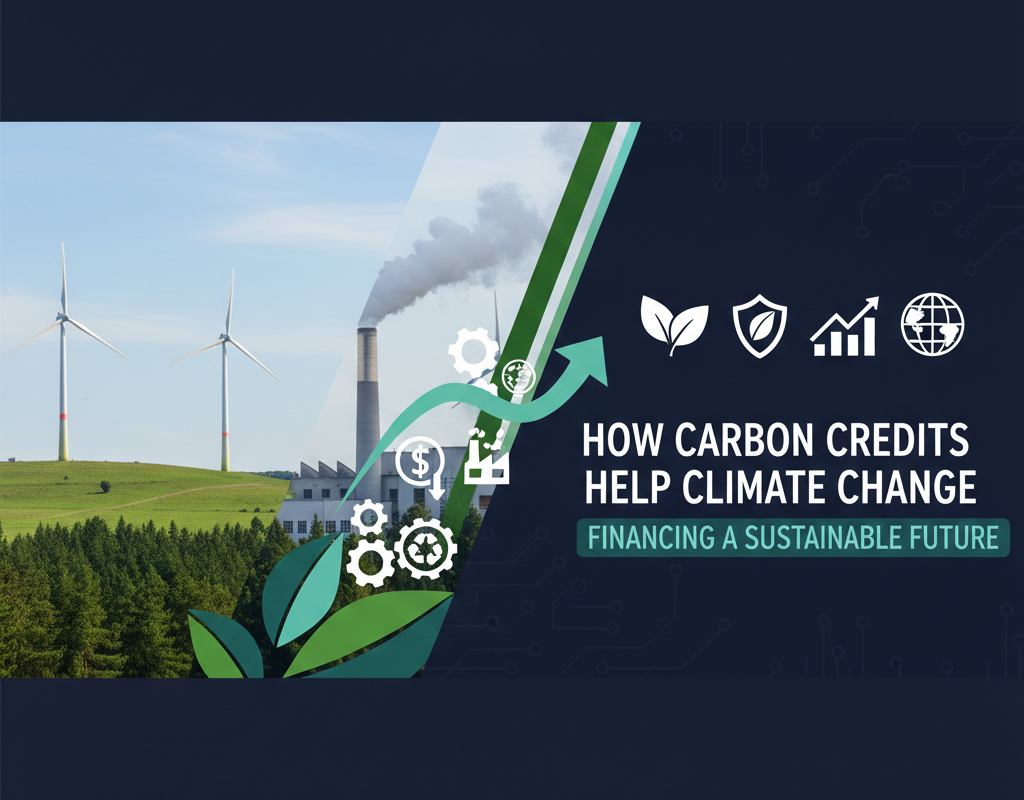
How Carbon Credits Help Fight Climate Change
How Carbon Credits Help Fight Climate Change
Threatening ecosystems, economies, and lifestyles worldwide, climate change has become one of the 21st century’s most urgent issues. Sea level rise, melting glaciers, unpredictable weather patterns, and rising global temperatures are all current events rather than hypothetical threats. Carbon credits have emerged as a potent and useful weapon in the fight against climate change as governments, corporations, and individuals look for workable answers.
Carbon credits are essential for lowering greenhouse gas emissions, promoting sustainable growth, and allocating funds to climate-friendly initiatives. Carbon credits assist in balancing economic growth and environmental responsibility by giving emission reductions an economic value.

Recognizing Climate Change and the Need for Quick Response
The buildup of greenhouse gases like carbon dioxide, methane, and nitrous oxide in the atmosphere is the main cause of climate change. These gases cause long-term climatic changes and global warming by trapping heat. Over the past century, the world’s emissions have increased dramatically due to industrialization, deforestation, the use of fossil fuels, and unsustainable agricultural practices.
Many industries, such as manufacturing, heavy industry, and aviation, cannot instantly achieve complete emission elimination despite technological breakthroughs. Because of this reality, market-based procedures have been developed that enable emissions to be decreased where they are most economical and efficient. One such tool that provides a versatile yet effective strategy for mitigating climate change is carbon credits.
Carbon Credits: What Are They?
One metric ton of carbon dioxide or its equivalent in other greenhouse gases is reduced, avoided, or removed from the atmosphere in the form of a carbon credit. Certified projects including methane capture, energy efficiency upgrades, forest conservation, and renewable energy production are responsible for these decreases.
Organizations that want to offset their emissions can sell, buy, or retire carbon credits. Organizations can sponsor initiatives that lower global emissions while also making up for emissions they are unable to completely eliminate by purchasing carbon credits.
Carbon Credit Market Types
- Carbon Markets for Compliance
Governments impose emission limitations on particular industries or sectors in compliance markets, which are regulated systems. To stay in compliance, entities that exceed their emission caps must buy carbon credits. These markets are essential for achieving systemic change at scale and enforcing carbon reduction targets.
- Markets for Voluntary Carbon
Organizations and individuals can voluntarily offset their emissions by purchasing carbon credits through voluntary markets. In addition to supporting a variety of climate projects, these marketplaces promote proactive climate action above and beyond legal requirements.
By encouraging emission reductions and raising climate funding, both markets make a substantial contribution to mitigating the effects of climate change.
How Greenhouse Gas Emissions Are Decreased by Carbon Credits
By providing a clear financial incentive to cut emissions, carbon credits aid in the prevention of climate change. Carbon credit schemes turn pollution reductions into business possibilities rather than expenses.
When pollution reductions produce income, projects that might not otherwise be financially feasible become alluring investments. This encourages sustainable land-use practices, boosts industrial efficiency, and quickens the adoption of clean technologies.
Carbon credits guarantee that global climate targets can be met more effectively by allowing emissions to be cut where it is most cost-effective and fastest.
Promoting Clean Technologies and Renewable Energy
Promoting renewable energy is one of the most important functions of carbon credits. Carbon credit income is frequently used to cover the high initial costs of solar, wind, biomass, and hydropower projects.
Clean energy projects can now compete financially with alternatives based on fossil fuels thanks to carbon credits. Long-term emission reductions and increased energy security result from a decrease in reliance on coal, oil, and gas as renewable energy generation grows.
To further cut emissions across industries, carbon credits also encourage the use of energy-efficient technologies in building, transportation, and manufacturing.
Encouragement of Afforestation and Forest Conservation
Large volumes of carbon dioxide are taken up from the atmosphere by forests, which serve as natural carbon sinks. Through afforestation and reforestation initiatives, carbon credit mechanisms promote the preservation of existing forests and the repair of degraded areas.
These programs benefit local populations, conserve biodiversity, and safeguard water supplies in addition to lowering atmospheric carbon. Carbon credits help offset deforestation caused by urbanization and agriculture by giving standing forests an economic value.
Corporate Climate Responsibility and Carbon Credits
Investors, regulators, and customers are putting more and more pressure on businesses to manage their environmental effect. Carbon credits give businesses a realistic approach to reach net-zero and carbon neutrality goals.
Businesses can take immediate climate action while aiming for long-term emission reductions by including carbon credits into sustainability programs. This strategy integrates business operations with global climate goals, improves stakeholder confidence, and boosts corporate reputation.
Additionally, carbon credits assist businesses in protecting their operations from changing environmental laws and carbon price schemes.
Assisting Developing Regions with Climate Finance
The capacity of carbon credits to allocate climate funds to developing nations is among their most potent advantages. Emerging economies provide numerous chances to reduce emissions, and investments there can have a significant positive impact on the environment and society.
Revenues from carbon credits go toward improving livelihoods in underserved and rural areas, creating jobs, transferring technologies, and developing infrastructure. This guarantees that addressing climate change also advances social justice and sustainable development.
Conclusion: How Carbon Credits Help Fight Climate Change
By converting emission reductions into quantifiable, market-driven action, carbon credits aid in the mitigation of climate change. They make it possible to cut emissions at a reasonable cost, promote renewable energy, save forests, and direct climate funds to the areas who need them the most.
Carbon credits help close the gap between environmental responsibility and economic development when they are applied honestly and openly. They enable communities, corporations, and governments to take significant climate action now and create a sustainable future for future generations.
Carbon credits are not a panacea in the global fight against climate change, but they are a vital component of the answer, encouraging cooperation, creativity, and optimism as we move toward a low-carbon future.
Carbon Credits Meaning with Examples: A Complete Guide for India and the Global Market
Carbon Credits Meaning with Examples: A Complete Guide for India and the Global Market
3 Comments