
 Aksh
Aksh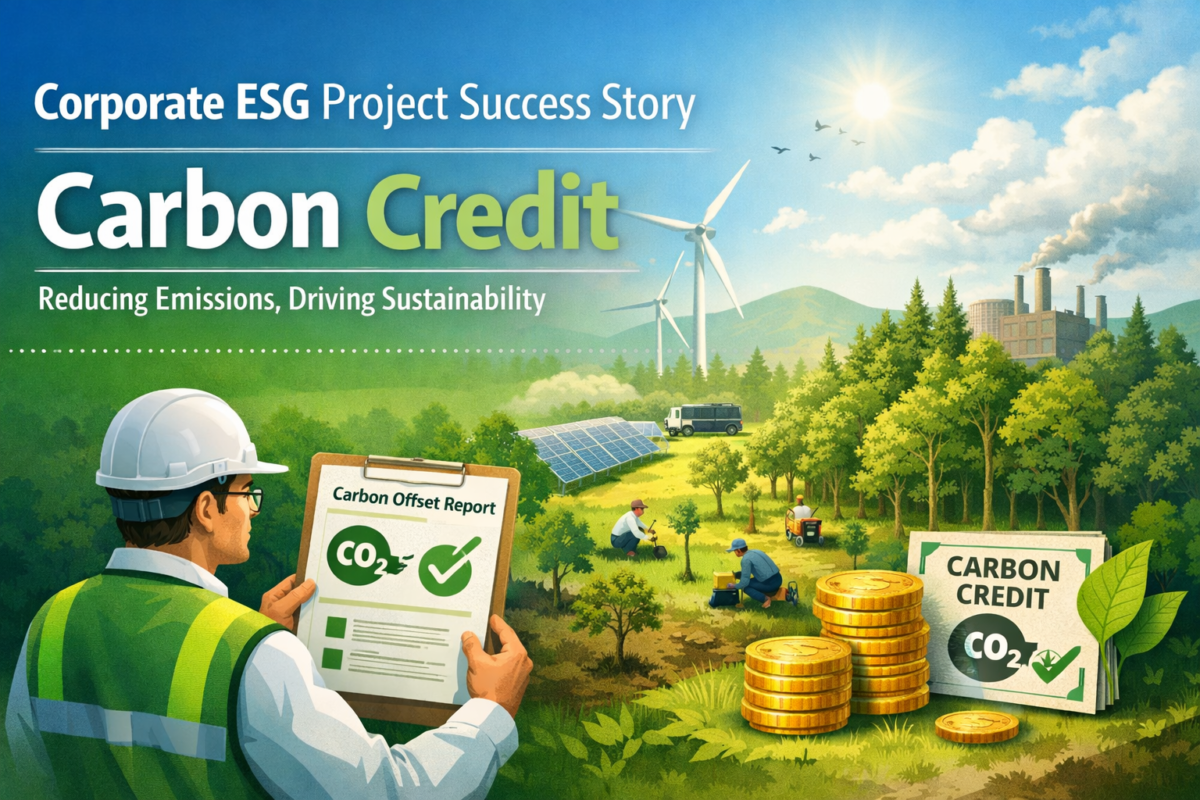
From ESG Planning to Carbon Credit Achievement
From ESG Planning to Carbon Credit Achievement
Corporate ESG programs have evolved from optional reporting tools to strategic imperatives that provide actual economic benefit in the age of increased climate awareness and global sustainability commitments. An Indian company that successfully changed its operational footprint while producing verified carbon credits that complied with international sustainability standards is one outstanding corporate ESG project success story that stands out for its carbon credit accomplishments and quantifiable environmental impact.
This business sustainability success story demonstrates how proactive leadership, careful planning, and strong execution can produce significant outcomes in terms of reducing environmental impact and increasing stakeholder value. The company not only met carbon credit milestones but also established new standards for ESG activities in India by incorporating carbon reduction methods into its core business operations.

ACCEPTING ESG INTEGRATION AND CORPORATE SUSTAINABILITY
The business understood from away that sustainability is a strategic benefit as well as a legal need. The business started an ambitious plan to integrate environmental, social, and governance concepts at every level of its operations as environmental concerns grew as a result of climate change and regulatory pressures. Reducing carbon emissions and taking part in carbon market mechanisms that reward proven emission reductions with carbon credits were the project’s primary goals.
The company carried out a thorough materiality evaluation to determine important sustainability priorities with a clear directive from the board and executive leadership. Climate resilience, energy optimization, and carbon reduction were identified as high-impact topics in this evaluation.
Creating a Sturdy Carbon Reduction Plan
Following the establishment of the emissions baseline, the business developed a thorough carbon reduction plan that complied with sustainable development objectives and global best practices. Stakeholder participation, process optimization, energy efficiency improvements, and the switch to renewable energy sources were all included in the approach.
The use of energy-efficient technologies throughout production facilities was one of the main aims. This included refining heating and cooling systems to use less energy, deploying sophisticated process controls to limit energy waste, and replacing lighting systems with LED alternatives. Within the first year of deployment, the company generated significant energy savings by utilizing state-of-the-art technologies and operational excellence approaches.
Creating Carbon Credits via Confirmed Initiatives
The creation and certification of carbon credits is at the heart of this corporate ESG project success story. Instead of concentrating only on lowering internal emissions, the corporation planned projects that produced measurable environmental benefits that were acknowledged by verified carbon standards. To guarantee adherence to strict measuring, reporting, and verification (MRV) criteria, these projects were painstakingly recorded, tracked, and audited.
Methane emissions from waste management operations were captured and transformed into useful energy in one noteworthy project. The corporation stopped strong greenhouse gases from entering the atmosphere by installing methane capture equipment at waste management plants. To further lessen dependency on fossil fuels, energy was produced using the trapped methane.
Afforestation and sustainable land management in rural areas affected by industrial activity were the main objectives of another carbon credit initiative. The business started extensive tree planting campaigns and soil restoration initiatives through neighborhood collaborations. These natural remedies boosted local livelihoods, increased biodiversity, and sequestered carbon dioxide. The company’s portfolio of carbon credits benefited from the calculated carbon sequestration and the independently confirmed afforestation effort.
LINKING FINANCIAL AND STRATEGIC GOALS WITH ESG PERFORMANCE
Although reducing environmental impact was a primary goal, this corporate ESG effort also produced financial and strategic advantages. Investor trust was bolstered by the company’s improved sustainability profile, which also made it easier to access ethical investment funds that give ESG performance first priority. This project increased the company’s appeal in sustainable finance markets, and portfolio managers and institutional investors are increasingly taking carbon risk and ESG measures into account when making capital allocation choices.
The carbon credit accomplishments not only attracted investors but also created prospects for revenue and cost reductions. Adoption of renewable energy protected the business from fluctuating energy prices, and energy efficiency measures lowered operating costs. Through public verification, the sale of carbon credits generated additional revenue that could be used to fund environmental initiatives.
Evaluating and reporting the impact of ESG
For this initiative to be successful, tracking and reporting progress was essential. To openly reveal its performance, the organization implemented internationally accepted ESG reporting formats. Key performance indicators pertaining to energy use, carbon emissions, the adoption of renewable energy, and the creation of carbon credits were highlighted in comprehensive sustainability reports.
The corporation proved accountability and how sustainability results convert into commercial value by integrating ESG KPIs into financial reporting cycles. Standardized metrics improved comparability for stakeholders and made comparisons against industry counterparts easier.
Overcoming obstacles and promoting ongoing development
This corporate ESG effort has difficulties, much like any other transformational endeavor. Concerns about implementation costs, internal resource allocation, and the unpredictability of long-term returns were the main causes of the first resistance. The organization used strong business cases based on scenario analysis, open leadership communication, and experimental programs that showed early successes to solve these issues.
By collaborating with subject-matter experts and investing in cutting-edge digital solutions, technical challenges pertaining to data collecting, emissions tracking, and verification were overcome. Proactive decision-making and improved data accuracy were made possible by the incorporation of real-time monitoring technologies.
IMPACT AND LEGACY: DEFINING ESG EXCELLENCE AS A STANDARD
The company was positioned as a sustainability leader as a result of the industry-wide impact of this corporate ESG effort. Its successes in creating carbon credits, cutting emissions, and increasing stakeholder value set the standard for other businesses looking to include ESG into their main business plans. The project’s results were acknowledged by business groups, industry forums, and sustainability councils, opening the door for information exchange and cooperative action.
Crucially, the study showed how commercial success and environmental goals may be connected through strategic sustainability measures. The corporation demonstrated that ethical business practices are a fuel for innovation, growth, and resilience rather than a cost center by coordinating corporate goals with climate action.
IN CONCLUSION: From ESG Planning to Carbon Credit
In addition to profitability, today’s business environment demands purpose-driven activity that tackles social justice, climate change, and responsible governance. This success story of a corporate ESG project demonstrates how a well-run sustainability program can improve environmental performance, boost corporate reputation, and produce quantifiable carbon credit results.
In addition to achieving carbon credit achievement, the company showed that sustainability can be a source of strategic value creation by turning intention into action. Its path from baseline evaluation to certified carbon credits, from operational enhancements to stakeholder involvement, provides a model for businesses worldwide looking to translate ESG pledges into real results.