
 Aksh
Aksh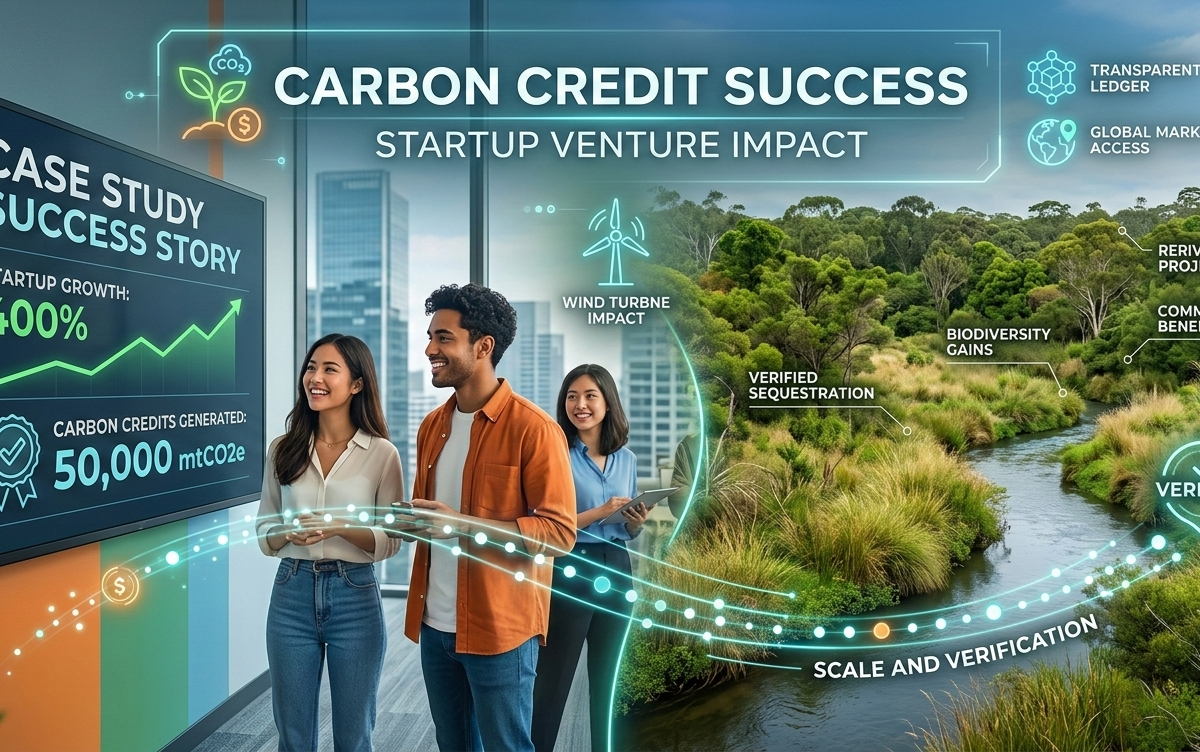
Carbon Credit Startup Success in India
Carbon Credit Startup Success in India
One Indian carbon credit firm has become a shining example of success in an era when environmental sustainability, climate change, and carbon neutrality are top concerns on international agendas. This thorough startup case study explores how a daring concept developed into a successful company that had quantifiable environmental impact and created long-lasting value. This news story examines how the Indian carbon credit startup overcame early obstacles, capitalized on innovation, and helped the rapidly expanding carbon market.
This Indian carbon credit startup’s tale shows how innovative technology, effective climate finance solutions, and purpose-driven entrepreneurship can revolutionize sectors and spur change. This success story is based on practical tactics, well-considered business plans, and community-focused principles that appealed to partners, investors, and clients alike.

Comprehending India’s Carbon Credit Revolution
Understanding the larger backdrop of the carbon credit ecosystem is crucial before delving into the path of this incredible firm.
Carbon credits, which allow businesses and people to offset their greenhouse gas emissions by investing in approved environmental initiatives, have emerged as a key component of global climate policies. Initiatives like waste-to-energy projects, community-scale sustainability programs, forest conservation, and the use of renewable energy are the foundation of carbon credits in India.
Since companies are adopting ambitious ESG (Environmental, Social, Governance) goals, the market for carbon credits has grown quickly. Carbon credits are becoming more and more valued by Indian companies as a component of sustainable development plans, which gives this startup access to a developing and dynamic market.
Founding Vision: Transforming Climate Ambition into Business
A group of climate activists identified a special chance to close the gap between corporate demand and the supply of carbon credits and created the firm. Building an efficient carbon credit network that supports Indian initiatives, boosts transparency, and provides premium carbon certificates was their explicit goal.
The startup team initially carried out a thorough analysis of the worldwide carbon credit market, regulatory environments, and the distinct advantages of India’s climate technology sector. They discovered an important fact: although many Indian projects had a great deal of potential to produce carbon credits, they were unable to obtain market access, financing, or systematic certification.
Early Difficulties and Strategic Advances
Like many companies, there were difficulties along the way. Building confidence with project owners, managing changing climate policy frameworks, and charting the intricate carbon certification process were some of the early challenges.
- Carbon Certification’s Complexity
Thorough measurement, reporting, and verification (MRV) are necessary for carbon credit certification. Many project developers lacked the skills necessary to adhere to strict guidelines. To expedite the MRV process, the business made an investment in assembling an internal team of climate scientists, sustainability specialists, and carbon auditors.
- Scaling and Funding
It was necessary to explain the worth of carbon credits to investors who were not familiar with climate finance models in order to secure seed funding. With the support of case studies, environmental effect estimates, and a well-defined business model, the founders created persuasive pitch decks.
A Distinctive Carbon Credit Business Plan
A unique business plan that balanced sustainability and financial feasibility was essential to the startup’s success.
- Empowerment and Project Aggregation
The startup created a framework for combining several small and medium-sized low-carbon initiatives rather than concentrating on a small number of assets. This includes solar deployment in underserved areas, methane collection units, clean cooking fuel programs, and rural afforestation projects.
- Digital Transparency Platform
The firm introduced a digital platform that tracks the issuance of carbon credits, handles project data, and links purchasers with verified carbon credits in order to scale effectively. This digital ecosystem improves transparency, a crucial differentiator in a sector where trust is crucial, and streamlines a historically difficult market.
Early Achievements: Significance and Acknowledgment
The startup accomplished a number of noteworthy milestones in its first two years of business.
- Carbon Offset and Project Footprint
In the first 18 months, the business onboarded more than 50 carbon-generating projects around India. Together, these initiatives helped India achieve its national climate goals by offsetting millions of metric tons of carbon dioxide equivalent (CO2e).
- Partnerships and Corporate Demand
The organization started working with businesses looking for sustainable carbon solutions to create custom carbon credit portfolios. By coordinating carbon credit purchases with certain ESG commitments, the startup enabled tailored solutions for businesses in various sectors.
ESG and Carbon Credits in the Business Sector
Globally, businesses are under pressure to fulfill ESG objectives and exhibit climate leadership. As businesses strive to offset emissions and reach net-zero targets, carbon credits have emerged as a key component of this approach.
By providing verified carbon credits that meet international requirements, this firm has established itself as a reliable partner in corporate sustainability programs. The startup’s verification procedures, open data, and diverse portfolio are valued by corporate purchasers.
The startup’s goal is to inform businesses about ethical offsetting, long-term emissions reduction planning, and best practices for using carbon credits.
Testimonials from Field Voices
Positive testimonials about working with the business have come from both corporate buyers and project developers.
One community project leader explained how carbon finance, which funds infrastructure for water purification and renewable electricity, changed local livelihoods. The startup has received recognition from corporate partners for its prompt service, accurate data, and strategic insights that reinforced their ESG disclosures.
Beyond data and transactions, these voices capture the impact this startup’s ecosystem has on people and business.
In conclusion: Carbon Credit Startup Success in India
More than growth figures, this startup case study success story demonstrates vision, tenacity, and climate commitment. This Indian carbon credit firm opened up new avenues for corporate participation and climate finance by combining technology, environmental knowledge, and a solid business plan.
This narrative provides a model for bringing about significant change and creating scalable effect for business owners, financiers, and climate activists. Carbon markets are certain to grow in the future, and with trailblazers like this firm at the forefront, climate solutions are becoming more widely available, reputable, and lucrative.
This voyage has strengthened the Indian carbon credit ecosystem, and the lessons learnt will continue to spur climate innovation for years to come.