
 Aksh
Aksh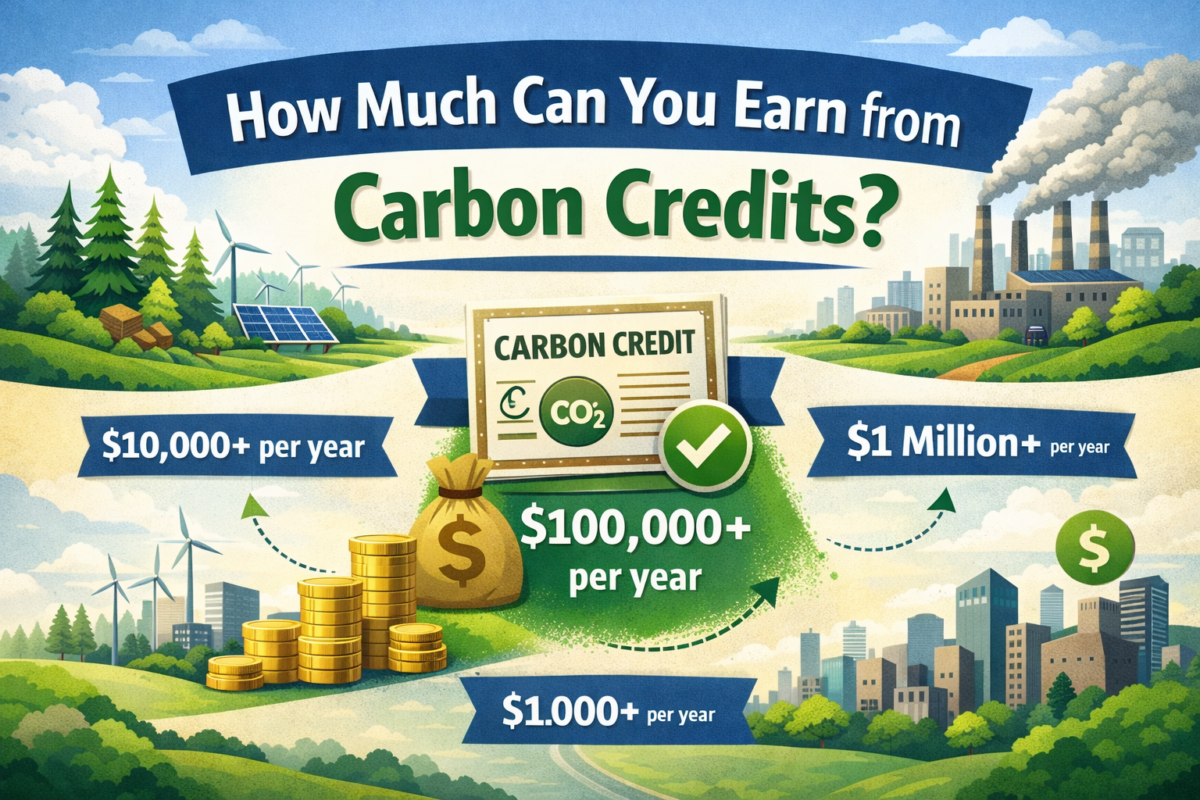
How Much Can You Earn from Carbon Credits in India?
How Much Can You Earn from Carbon Credits in India?
In India, carbon credits have quickly emerged as one of the most attractive commercial and environmental prospects. Individuals, farmers, industries, startups, and businesses are investigating the potential earnings from carbon credits and whether it is a feasible source of revenue as climate action picks up speed on a global scale.
Large firms can now profit from carbon credits as India has strengthened its climate obligations and established a structured carbon market system. By lowering or eliminating greenhouse gas emissions, waste management firms, small farmers, renewable energy entrepreneurs, and even community projects can make a sizable profit.

Comprehending Carbon Credits
One metric ton of carbon dioxide (CO₂) or its equivalent greenhouse gas is reduced or removed from the atmosphere to create a carbon credit. Following confirmation that a project has decreased emissions in comparison to a baseline scenario, these credits are granted.
There are two main markets where carbon credits are traded:
- Compliance Market: Businesses must legally offset their emissions.
- Voluntary Market: To achieve sustainability objectives, businesses and individuals voluntarily buy credits.
In accordance with its national climate pledges, India is aggressively expanding its compliance-based carbon market, which is supervised by regulatory bodies. At the same time, a significant portion of the voluntary carbon market is made up of Indian initiatives.
How Much Does a Carbon Credit Cost in India Right Now?
Numerous variables, including project type, certification standard, demand, and international market circumstances, affect the cost of carbon credits.
The typical price ranges as of 2026 are:
- Each voluntary carbon credit costs between ₹400 and ₹2,500.
- ₹1,500 to ₹4,000 for premium nature-based credits
- Foreign voluntary credits range from $5 to $30 per, or roughly ₹400 to ₹2,500+.
Pricing for compliance market credits (a new market in India) is determined by regulatory benchmarks.
Quality, verification standards, co-benefits (such as community impact or biodiversity), and corporate demand all affect pricing.
What Affects Earnings on Carbon Credits?
How much you can make depends on a number of factors:
- Type of Project
Generally speaking, methane reduction and nature-based programs are more expensive.
- Standard of Certification
Projects that are validated in accordance with internationally accepted standards are priced higher.
- Demand in the Market
Demand is increased by corporate net-zero pledges.
- Quality of Credit
Value is increased by high transparency, permanence, and community benefits.
- Project Size
Larger projects result in economies of scale, which lower the cost per credit.
The Expense of Carbon Credit Initiatives
Costs must be taken into account even when earnings may be alluring:
- Study of project viability
- Verification and validation
- Observation and reporting
- Registry charges
- Fees for consultation
- Costs of legal compliance
Depending on its size, the initial project development might cost anywhere from ₹5 lakh to ₹50 lakh.
Nonetheless, a lot of developers recoup their expenses in the first one to two cycles of credit issuing.
Is Income from Carbon Credits Guaranteed?
Income from carbon credits is determined by the market. Even while demand is rising quickly, prices vary depending on:
- Policies for the global climate
- Spending on ESG by corporations
- Balance between supply and demand
- Modifications to regulations
Long-term trends, however, point to rising demand as businesses make more commitments to achieving net-zero.
Growth Prospects for the Carbon Market in India
India is becoming a global leader in efforts to mitigate climate change. It is anticipated that the Indian carbon credit market would expand rapidly over the next ten years due to rising renewable energy capacity and environmental legislation.
It is anticipated that government-supported carbon trading schemes will offer compliance-based demand and structured pricing, further stabilizing income potential.
How to Increase Your Earnings on Carbon Credits?
To boost your earnings:
- Select project types with a strong impact.
- Join forces with knowledgeable carbon consultants.
- Assure appropriate documentation and monitoring.
- Target high-end voluntary purchasers
- For scale, group smaller projects together.
- Pay attention to sustainability over the long run.
Considerations for Risks
Despite the high earning potential of carbon credits, take into account following risks:
- Volatility of prices
- Delays in verification
- Modifications to policies
- Underperformance of the project
- Certain categories have reached market saturation.
Effective planning is crucial for risk reduction.
Conclusion: How Much Can You Earn from Carbon Credits in India?
In India, carbon credit earnings can vary greatly:
- Small farmer: between ₹50,000 and ₹2 lakh annually
- Medium-sized business: ₹20 lakh to ₹1.5 crore per year
- Large-scale infrastructure projects cost between ₹5 crore and ₹20 crore or more annually
Although there is a lot of potential, project design, verification, and market strategy are key to success.
In India’s expanding green economy, carbon credits offer a significant financial potential in addition to being an environmental endeavor.
Early adopters stand to gain the most from this new climate-driven revenue stream as the carbon credit market develops and demand increases.
Carbon Credit Exchange in India: Driving Sustainable Growth and Climate Action
Carbon Credit Exchange in India: Driving Sustainable Growth and Climate Action
2 Comments