
 Aksh
Aksh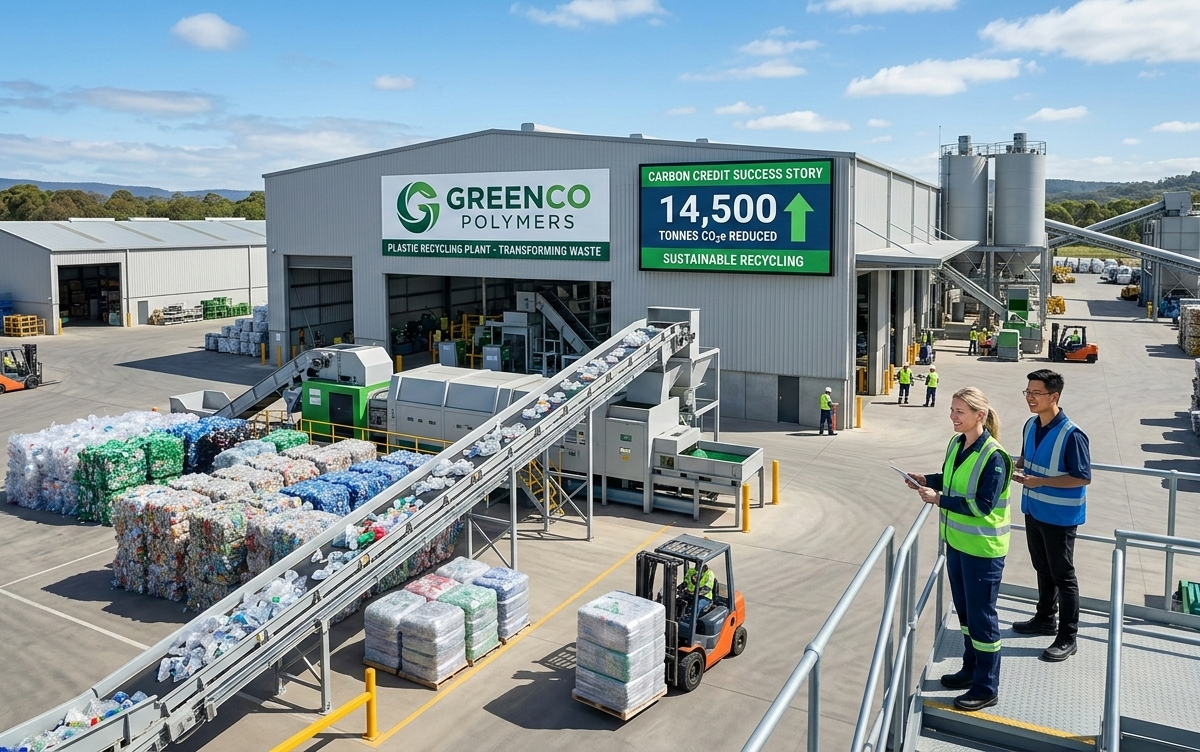
Plastic Recycling Plant Driving Carbon Credit
Plastic Recycling Plant Driving Carbon Credit
Overview: A New Era in Eco-Friendly Plastic Recycling
By incorporating carbon credit generation into its basic activities, a plastic recycling factory in the center of India’s industrial landscape has achieved extraordinary success. This success story is about reimagining sustainability in the contemporary industrial ecology, not only recycling plastic. This plastic recycling facility has set the standard for carbon credit achievement and sustainable manufacturing thanks to its cutting-edge technology, strategic vision, and dedication to climate action.
This accomplishment is spurring expansion and encouraging companies, governments, and people throughout India to embrace comparable ecologically conscious practices. The plant’s narrative demonstrates how recycling plastic may generate carbon credits, transforming waste into cash and drastically lowering carbon emissions.

India’s Problem with Plastic Waste
India presents an enormous difficulty in handling plastic trash due to its rapidly urbanizing population. Alarmingly high amounts of plastic pollution are affecting human health, aquatic bodies, and land. Environmental deterioration and greenhouse gas emissions are caused by conventional garbage disposal techniques like landfilling and incineration.
Plastic recycling is now at the forefront of industrial strategy and environmental policy due to the urgent demand for sustainable solutions. Even while recycling rates have increased over time, a sizable amount of plastic debris still ends up in the environment or landfills. How to scale recycling systems while generating financial incentives for communities and businesses has proven to be a distinct difficulty.
Carbon Credits: A Revolution in Recycling
An important turning point in the global battle against climate change is represented by carbon credits. In essence, one ton of CO2 emissions prevented or reduced by approved environmental projects is represented by a carbon credit. Carbon credits are an economic incentive for enterprises to reduce their carbon emissions since they may be traded or used to offset their own emissions.
The idea of creating carbon credits from plastic recycling plants connects economic worth with environmental responsibility. Recycling facilities can produce verified carbon credits by using cutting-edge recycling technology that drastically lower greenhouse gas emissions. Businesses wishing to offset their emissions can purchase these carbon credits, creating a new source of income that improves the recycling business’ financial sustainability.
The Success Story’s Origins: Vision and Dedication
This specific plastic recycling facility’s journey started with a clear goal: to transform the way plastic trash is managed and establish a model that could be used across the country. The founders understood that recycling plastic needed to go beyond traditional methods and be in line with frameworks for global climate action.
The leadership initially concentrated on three main goals:
- Making certain that the maximum amount of plastic waste is gathered and processed is known as “maximizing plastic waste diversion.”
- Using cutting-edge recycling equipment and procedures that reduce energy use and emissions is known as “implementing low-emission technologies.”
- Certifying Carbon Credit Generation: Collaborating with environmental auditors to measure emission reductions and obtain carbon credits in accordance with accepted guidelines.
Impact-Driven Technological Advancements
The plant’s investment in state-of-the-art recycling technologies is essential to its success. Conventional mechanical recycling methods can use a lot of energy and frequently have trouble with mixed or tainted plastics. This facility significantly decreased emissions per ton of recycled plastic by utilizing cutting-edge sorting systems, effective shredders, and cutting-edge washing and extrusion machinery.
In order to fuel its operations, the factory additionally integrated renewable energy sources and energy recovery systems. The facility reduced its carbon footprint and increased its potential for carbon credits by obtaining solar electricity and optimizing energy use.
Verification and Certification of Carbon Credits
Strict monitoring, reporting, and verification (MRV) are necessary for the production of carbon credits. To gauge its progress in reducing greenhouse gas emissions, the facility hired certified environmental auditors. The auditors determined the net reductions due to the project by comparing baseline emissions from conventional waste disposal methods with emissions from the recycling operations of the plant.
Transparency and legitimacy were ensured by the certification process’ adherence to accepted international procedures. Following verification, the plant received the carbon credits, making it a valuable asset that businesses looking to offset their emissions may utilize or trade.
This accomplishment was a significant turning point: the plant was among the first in India to successfully produce carbon credits from plastic recycling operations, demonstrating a model that other recycling facilities may follow.
Economic Repercussions: From Waste to Income
The creation of carbon credits has a profoundly positive economic impact in addition to its considerable environmental benefits. The recycling facility improved its financial base by generating new money from the sale of carbon credits in developing carbon markets.
With this money, the company was able to:
- Increase the amount of processing power
- Invest on worker safety and training
- Give plastic waste collectors better rates.
- Improve initiatives for community engagement
The financial success dispelled the myth that environmental stewardship is a financial burden rather than a business opportunity by demonstrating how profitable operations and sustainability can coexist.
Social Impact and Community Involvement
The plant’s success went far beyond economics and technology; it also had a significant impact on the neighborhood. The plant started programs to inform and empower local waste collectors and citizens because it understood that efficient plastic waste management begins at the local level.
Among the programs were:
- Educating garbage pickers on plastic segregation best practices
- Giving unpaid waste workers safety equipment and just remuneration
- Running awareness initiatives in communities and schools
- Collaborating on collecting drives with local authorities
These initiatives increased recycling involvement in the community and gave people skills that enhanced their quality of life. As a result, the plastic recycling facility became a neighborhood hero, generating economic, environmental, and social advantages.
In conclusion: Plastic Recycling Plant Driving Carbon Credit
This plastic recycling plant’s success story is a brilliant illustration of what can happen when environmental goals and business aspirations collide. The factory has revolutionized sustainable industrial practices and helped combat climate change by converting plastic trash into useful resources and carbon credits.
This trip is representative of a larger trend toward circular economy solutions that put an emphasis on both economic opportunity and ecological balance. The potential for significant environmental change increases as more facilities use comparable models.
More than just a case study, the success of this plastic recycling facility in generating carbon credits serves as a road map for sustainable development, encouraging businesses, governments, and communities to reconsider waste management and emission reduction.