
 Aksh
Aksh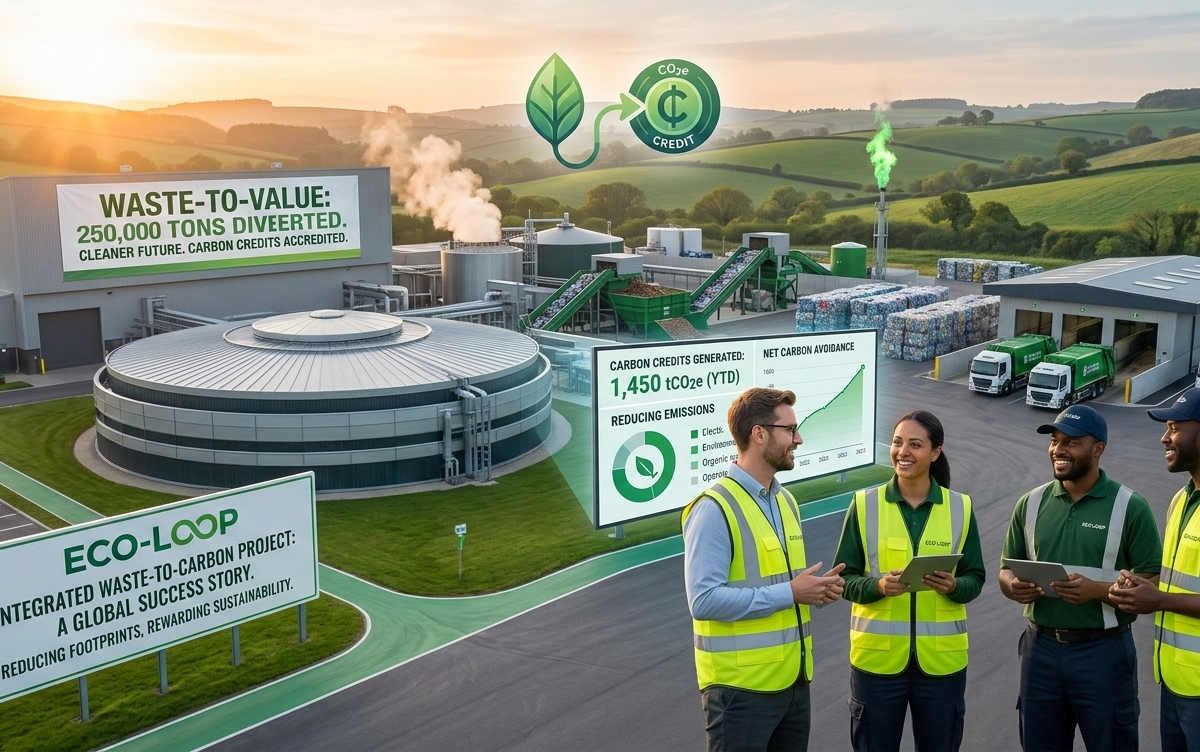
Sustainable Waste-to-Energy Project
Sustainable Waste-to-Energy Project
The way that India views and handles waste is changing. What was once thought to be an inevitable consequence of urbanization has evolved into a potent weapon in the fight against climate change. Innovative municipal solid waste management, landfill methane capture, and waste-to-energy programs can produce substantial carbon credits while generating economic and environmental value, as demonstrated by a recent waste management project success story.
This success story demonstrates how urban sustainability may be transformed by combining technical innovation, environmental responsibility, and carbon payment methods. In addition to lowering greenhouse gas emissions, this initiative has produced quantifiable climate and community benefits through systematic planning, scientific monitoring, and validated carbon credit generation.

India’s Increasing Waste and Climate Issues
Millions of tons of municipal solid trash are produced annually in India. The waste management dilemma has gotten worse due to population increase, rapid urbanization, and shifting consumption habits. Historically, a large portion of this trash has been disposed of in open landfills, which has had detrimental effects on the ecosystem.
Methane emissions from poorly managed trash are among the biggest environmental hazards. In terms of its ability to cause global warming, methane is a powerful greenhouse gas that is several times more potent than carbon dioxide. Methane is released into the atmosphere during the anaerobic breakdown of organic waste in landfills.
Innovative project developers have started putting in place structured waste management systems that are intended to lower methane emissions and turn trash into energy in recognition of this difficulty.
Overview of the Project: Sustainable Waste-to-Energy Project
A municipal solid waste facility in India that switched from open dumping methods to a scientifically managed waste processing system is the subject of the waste management project success story. The project included:
- Waste segregation at the source
- MBT stands for mechanical biological treatment.
- Organic waste composting
- Production of refuse-derived fuel (RDF)
- Methane capture systems in landfills
- Waste-to-energy production
By ensuring efficient processing of organic waste, this integrated method decreased the quantity of garbage that was dumped in landfills. At the same time, a gas collection system was used to absorb methane produced from legacy trash sites.
Carbon Credit System: How Climate Value Was Created by the Project
A globally accepted carbon standard was used to register the project. By means of stringent monitoring and reporting procedures, the decreases in greenhouse gas emissions were measured. Independent auditors confirmed these cuts to guarantee openness and legitimacy.
The creation of carbon credits was predicated on:
- Reduced methane emissions as a result of better landfill management
- Reductions in emissions due to methane flaring and capture
- Fossil fuel energy replacement via waste-to-energy production
- Lower emissions from transit as a result of localized processing
A carbon credit was created for every ton of carbon dioxide equivalent (CO2e) that was reduced. After then, these credits were released and made accessible on the voluntary carbon market.
The initiative became financially sustainable when verified carbon credits were sold, adding another source of income.
Implementation Approach: Methodical Execution
- Initial Evaluation
To ascertain the quantity of methane emissions produced by the current open landfill, a thorough baseline analysis was conducted before the project started. Baseline emissions were determined using historical waste data, waste composition analysis, and emission parameters.
- Development of Infrastructure
There was the installation of contemporary infrastructure, such as:
- Segregation units for waste
- Yards for composting
- RDF processing units
- Wells used for gas extraction
- Pipelines for collecting gas
- Systems for flaring
- Units for producing power
Both international carbon credit criteria and national environmental norms were taken into consideration when designing the infrastructure.
- Observation and Confirmation
In order to measure power generation, flaring efficiency, and methane flow rates, continuous monitoring devices were established. Data was entered into the carbon registry after being recorded and validated.
Verification by a third party made guaranteed that emission reductions were genuine, quantifiable, and extra.
- Involvement in the Community
To promote source segregation and increase the effectiveness of waste collection, community awareness initiatives were carried out. The system’s integration of informal garbage workers improved social outcomes and livelihoods.
Environmental Impact: Measurable Advantages of Climate Change
Significant environmental advantages were obtained from the project:
- Notable decrease in methane emissions
- Reduction of uncontrolled flames in landfills
- Better quality of the air
- Decrease in the pollution of groundwater
- Waste diversion from open dumping
The initiative eliminated hundreds of tons of CO2 equivalent emissions each year by capturing methane and turning it into energy. This quantifiable decrease made a direct contribution to efforts to mitigate climate change.
An example of sustainable development in India is the shift from uncontrolled waste dumping to an engineered, controlled waste management facility.
Economic Impact: Making Money from Environmental Action
The financial sustainability of this waste management project success story is one of its distinguishing characteristics. The project’s economic viability was largely dependent on carbon credits.
Among the revenue sources were:
- Sale of waste-derived power
- Compost product sales
- Selling gasoline made from waste
- Trading carbon credits
Capital expenditures and operating expenses were somewhat offset by the carbon credit revenue. Additionally, it promoted additional facility growth, resulting in long-term economic stability.
Conclusion: Sustainable Waste-to-Energy Project
This waste management project’s success shows how effective it is to combine carbon credit systems, methane collection technologies, and structured waste processing.
What started out as a way to address the issue of urban waste turned into a complete effort to combat climate change. The project converted environmental liability into sustainable value by producing renewable energy, cutting greenhouse gas emissions, and creating carbon credits.
Waste management carbon credit initiatives would be essential as India moves closer to a low-carbon future. For governments, corporate developers, and sustainability leaders looking to balance economic expansion with climate responsibility, this success story provides a model.