
 Aksh
Aksh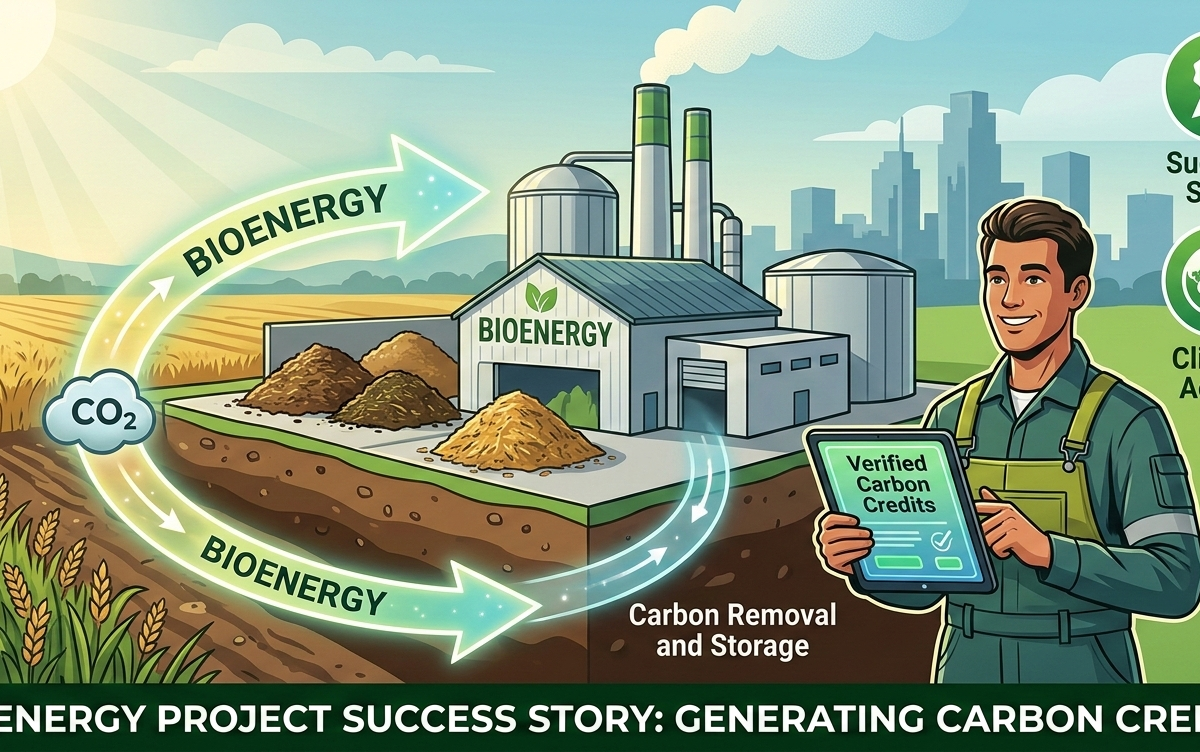
Renewable Energy Innovation in India
Renewable Energy Innovation in India
Bioenergy projects have become revolutionary ventures that not only lower greenhouse gas emissions but also produce valuable carbon credits, as worldwide emphasis turns to climate change mitigation, renewable energy deployment, and carbon finance solutions. India is leading this green energy revolution thanks to its vast agricultural sector and plentiful biomass resources. An example of sustainable development and climate leadership may be seen in the renewable energy industry, where a bioenergy plant in rural India used carbon credit systems to increase its environmental, economic, and social benefits.

Introduction: Bioenergy Projects’ Contribution to Climate Action
Energy produced from biological sources, such as organic municipal trash, forestry waste, agricultural residues, and other biomass materials, is referred to as bioenergy. Bioenergy may greatly replace the use of fossil fuels and lower net carbon emissions when it is effectively transformed into heat, power, or biofuels.
Because bioenergy projects provide proven emission reductions that may be marketed through carbon credits, they have special promise in the context of global climate frameworks and carbon markets. By encouraging sustainable behaviors and giving project developers and local communities financial incentives, these carbon credits serve as a link between the environment and the economy.
Project Overview: A Vision for Carbon Reduction and Sustainable Energy
The bioenergy plant, which is situated in central India’s lush agricultural area, was designed with two goals in mind: turning agricultural waste into clean energy and producing carbon credits by reducing emissions. The project’s main goal was to turn crop leftovers like rice husks and wheat straw, which are usually burned in fields and cause serious air pollution, into biomass fuel for electricity production.
- The Bioenergy Project’s goals
- Cut back on the open burning of agricultural waste.
- Create clean, renewable bioenergy for community and industrial use.
- Create validated carbon credits in accordance with a recognized carbon standard.
- Encourage sustainable livelihoods and jobs in rural areas.
- Provide investors and governments with scalable climate solutions.
Biomass Feedstock: Creating Opportunities Out of Waste
Effective and sustainable feedstock management is essential to the success of any bioenergy project. Agricultural leftovers were both a problem and an opportunity in this instance. Farmers have historically burned crop wastes to clear fields, which has resulted in smog, air pollution, and health risks for the general people.
An alternative was presented by the project: gather these scraps and turn them into biomass fuel. This provided a reliable, affordable feedstock for the production of bioenergy in addition to preventing the damaging pollutants linked to open burning.
- Important Aspects of the Biomass Feedstock Approach
- Collaboration on residue collection with nearby farmers.
- Building centers for the centralized collecting of biomass.
- Utilizing technology to densify, shred, and dry biomass.
- Models of fair pay for farmers involved in the supply chain for feedstock.
Generation of Clean Energy and Reduction of Emissions
Modern biomass gasification and combustion technologies were used in the project to ensure a steady supply of processed biomass. For local distribution and on-site consumption, these systems transformed biomass into heat and electricity. Bioenergy systems produce far fewer net greenhouse gas emissions than conventional fossil fuel burning.
- Calculating Reductions in Greenhouse Gases
Emission reductions must be meticulously measured, recorded, and validated in order to be eligible for carbon credits. This project used globally recognized performance monitoring techniques, such as:
- Evaluation of baseline emissions from fictitious fossil fuel consumption.
- The performance of the bioenergy system is continuously monitored.
- Independent confirmation by certified auditors.
In comparison to the baseline scenario, the study recorded significant decreases in emissions of carbon dioxide (CO₂), methane (CH₄), and nitrous oxide (N₂O) over a number of years.
Certification of Carbon Credits and Market Involvement
This initiative’s involvement in carbon markets was its primary novelty. The project applied for certification under a recognized standard that evaluates and validates carbon credits for bioenergy and renewable biomass projects in order to commercialize the shown emission reductions.
Carbon Credit Certification Procedures
Project registration entails submitting thorough project design documents that specify tasks, anticipated results, and monitoring strategies.
- Analyzing baseline scenarios involves determining the emission levels that would have existed in the absence of the project.
- Monitoring and Reporting: Gathering data on a regular basis to show performance.
- Third-Party Verification: Reductions in emissions were verified by independent auditors.
- Credit Issuance: Tradable carbon credits were created from the confirmed reductions.
Co-benefits for the environment and society
The initiative improved environmental quality and community well-being in addition to emissions and economics.
- Enhancement of Air Quality
The program greatly decreased particle matter and harmful pollutants in the local air by outlawing open burning. Public health was directly impacted by cleaner air, which decreased respiratory conditions and medical costs.
- Conserving Water
Soil and water quality are frequently deteriorated by traditional biomass burning. Croplands maintained healthier soil profiles through sustainable feedstock collection, which enhanced long-term fertility and water retention.
- Participation and Ownership in the Community
Local organizations, agricultural cooperatives, and village governments all have to actively participate in the project. A sense of ownership was promoted by inclusive decision-making, which increased adoption rates and guaranteed project continuity.
Scaling Impact: Policy Implications and Replication
This bioenergy project’s success has spurred further adoption in states and areas with comparable resource profiles. Climate strategists and policymakers can learn important lessons to hasten the adoption of renewable energy:
Important Takeaways for Policy Frameworks
- Private funding can be made available by incorporating carbon credit incentives into renewable energy laws.
- Promoting multi-stakeholder collaborations improves the scalability and robustness of projects.
- Reducing conflict and optimizing benefits can be achieved by coordinating bioenergy initiatives with agricultural sustainability.
- Investor confidence and market participation are increased by supporting uniform carbon credit procedures.
Governments may promote a decentralized renewable energy environment and progress national climate promises by taking note of this situation.
Conclusion: Renewable Energy Innovation in India
This bioenergy project success story serves as evidence of what may be achieved when market mechanisms such as carbon credit systems are combined with environmental creativity. The program is an example of sustainable development in action because it lowers greenhouse gas emissions, strengthens local communities, and promotes economic resilience.
Replicating this strategy is made possible by India’s renewable energy potential, especially in the areas of bioenergy and biomass resources. Similar initiatives can spread throughout rural and industrial landscapes and contribute to global climate goals with the help of supportive legislation, carbon financing tools, and technology uptake.