
 Aksh
Aksh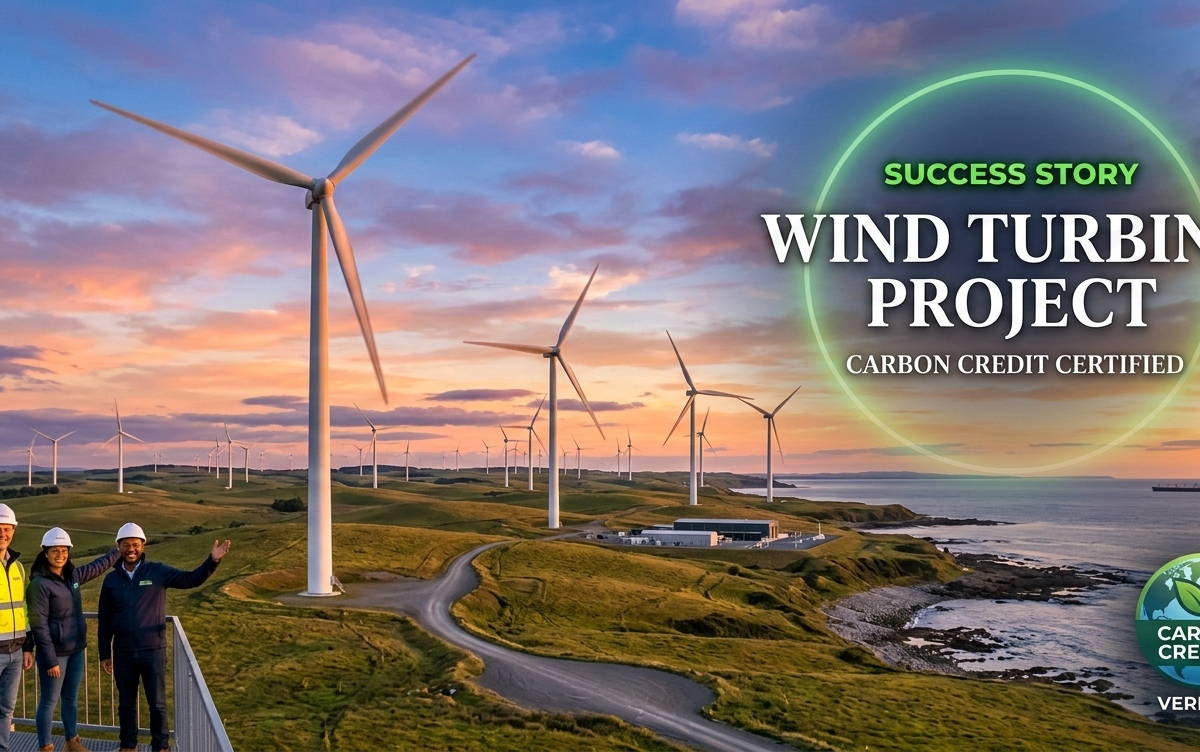
How a Wind Turbine Initiative Achieved Record?
How a Wind Turbine Initiative Achieved Record?
An impressive wind turbine project in India has become a model for the development of sustainable renewable energy linked to the creation of carbon credits in a time when climate change necessitates audacious and scalable solutions. This success story demonstrates how technological progress, community involvement, and strategic planning have had a cascading influence on the renewable energy sector. The project is a shining example of progress in India’s climate action story, with record increases in carbon credits, economic upliftment for rural stakeholders, and exponential environmental benefits.
The expansion of wind-powered renewable energy infrastructure has long been seen as crucial to India’s energy sector’s decarbonization. However, a wind energy project’s impact is increased beyond only producing electricity when carbon credit generation is incorporated.

Project Origins: Goals, Objectives, and Initial Approach
The primary objective of the wind turbine program was to take advantage of India’s enormous potential for renewable energy and turn it into a system for collecting carbon credits that would support both local development goals and national climate obligations. The desire to lessen reliance on fossil fuels and reduce carbon emissions has motivated India to set aggressive goals for renewable energy, particularly in the wind energy industry.
Important parties envisioned a project that reduced carbon emissions and produced tradable carbon credits in addition to producing clean electricity. One way to assess prevented carbon dioxide emissions is through carbon credits. Projects can produce certified emission reductions by measuring the emissions avoided by using renewable energy.
Implementing Next-Generation Wind Turbines with Technical Excellence
The success of the project was largely dependent on engineering and technology. To increase energy output and dependability, cutting-edge wind turbines with sophisticated aerodynamic blade designs and intelligent performance analytics were installed.
Among the significant technological elements were:
- High-yield turbines appropriate for the wind conditions in the area,
- Systems for remote monitoring to measure performance and forecast maintenance requirements,
- Technology for grid integration that guarantees efficient energy distribution,
- Carbon emission monitoring devices to accurately measure saved emissions.
These technological advancements guaranteed that the turbines produced reliable data for carbon credit verification while operating at maximum capacity. Since carbon credit certification necessitates thorough documentation of emissions averted, performance analytics were crucial in confirming greenhouse gas reductions. Transparency was strengthened by combining digital telemetry with real-time tracking.
Comprehending Emission Reductions and Verification in the Carbon Credit Mechanism
This project’s carbon credit model complies with internationally accepted criteria that call for thorough baseline calculations, close observation, and third-party validation. The process for creating and certifying carbon credits is as follows:
- Calculation of Baselines
The amount of greenhouse gas emissions that would have happened in the absence of the wind farm is represented by a baseline. An evaluation of the local energy mix, which usually consists of coal or diesel-based generating, is necessary to calculate this. The overall carbon emission reductions are calculated as the difference between the emissions in the baseline scenario and the actual emissions following the operation of the wind farm.
- Observation and Quantification
Accurate recording of real electricity generation is ensured by ongoing performance monitoring. Emissions saved are closely correlated with the quantity of renewable energy generated. Calculations of carbon credits use this data.
- Verification by a Third Party
The project’s emissions data was examined by independent auditors, who verified the decrease figures. Verification guarantees adherence to strict guidelines and increases confidence among buyers of carbon credits.
- Issuance and Registration
The project’s emission reductions were registered with a reputable carbon registry after validation. Carbon credits were awarded and made available for purchase on voluntary carbon markets after approval.
Benefits to the Environment and Climate Resilience
The project has had a significant influence on the environment. The wind turbines have produced millions of kilowatt-hours of renewable energy during their operation, replacing an equivalent quantity of electricity derived from fossil fuels. As a result, there have been notable decreases in:
- Emissions of carbon dioxide,
- Air pollutants such as particulate matter and sulfur dioxide,
- Destruction of the environment brought on by contaminated energy sources.
- Protection of Biodiversity
Additionally, the effort helped to preserve regional ecosystems. The area saw a decrease in emissions that cause acid rain and habitat disturbance as a result of less reliance on fossil fuels. Cleaner air and better habitat conditions helped wildlife and bird numbers.
- Adaptation and Resilience to Climate Change
The project’s carbon credits support more comprehensive national and international climate adaptation plans. They assist governments and businesses in fulfilling their climate pledges under agreements like the Paris Agreement. As a result, the project’s environmental achievement has been included into the broader scheme of climate mitigation initiatives.
Market Performance: Sales of Carbon Credits and Financial Results
The wind project’s financial story reflects its social and environmental accomplishments. The project’s carbon credits attracted a lot of interest in voluntary carbon markets, especially from businesses with aggressive climate objectives.
Buyers were drawn to:
- Independent confirmation by a third party,
- Robust performance information,
- Documentation of the community’s influence,
- Credentials for long-term sustainability.
The regular cash stream from the sale of carbon credits enhanced project profitability and investor returns by supplementing power sales. The project’s performance in carbon markets also made it a model for other renewable infrastructure projects that want to use carbon finance to diversify their revenue streams.
In conclusion: How a Wind Turbine Initiative Achieved Record?
This wind turbine project success story is a potent reminder of what is possible when ambition for renewable energy and innovation in carbon finance come together. The project demonstrates a holistic approach to sustainable development by producing clean electricity, lowering carbon emissions, strengthening local communities, and producing noticeable environmental benefits.
The project’s financial stability was greatly increased by the incorporation of carbon credit systems, and its quantifiable social and environmental advantages highlight the comprehensive value that such initiatives may unlock. Stories like this bolster hope that well-thought-out renewable projects can provide socially inclusive, environmentally responsible, and economically feasible climate solutions as India and the rest of the globe struggle with climate change.