
 Aksh
Aksh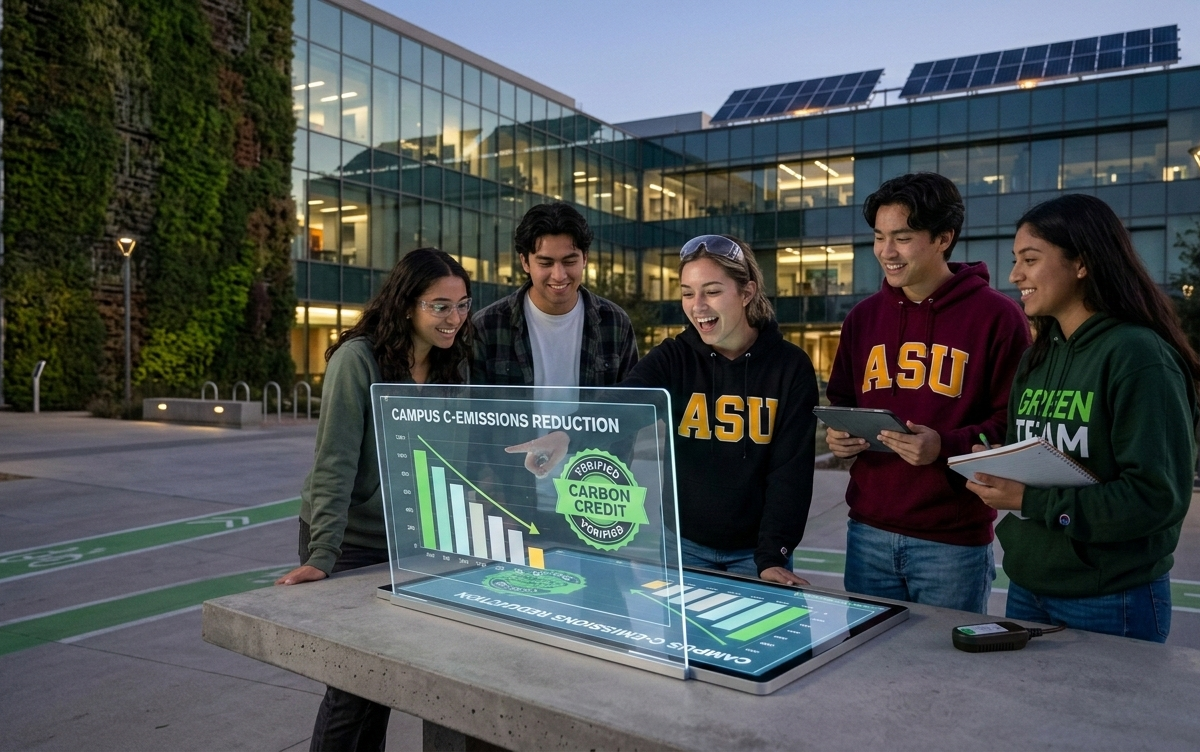
Carbon Credit Initiatives in Schools and Colleges
Carbon Credit Initiatives in Schools and Colleges
India’s educational institutions are becoming increasingly potent change agents in a time characterized by environmental unpredictability and climate change issues. Schools around the nation are transforming campuses into sustainability hubs and classrooms into climate laboratories. Students, instructors, and administrators are not only learning about environmental responsibility but also actively participating in carbon emission reduction and climate change programs, as evidenced by an impressive carbon credit project success story from Indian educational institutions.

Comprehending Carbon Credits in the Classroom
One metric ton of carbon dioxide (CO₂) or comparable greenhouse gasses removed from the atmosphere is represented by a carbon credit. Carbon credits are traded globally to assist businesses in offsetting their emissions. India is a major player in the global carbon market and is a country that is developing quickly.
Educational institutions can produce verified carbon credits when they implement carbon reduction projects, such as methane collection programs, solar panel installations, or afforestation campaigns. In addition to offering monetary rewards, these credits function as teaching aids by showcasing practical sustainability.
Climate awareness has been translated into quantifiable environmental impact in recent years as Indian schools and colleges have started including carbon offset programs for schools into their academic and extracurricular frameworks.
A Student-Led Climate Initiative’s Inception
A straightforward sustainability assessment marked the beginning of one trailblazing college’s journey. A thorough evaluation of the campus carbon footprint was carried out by environmental science students and faculty. They assessed energy inefficiency, waste production, water use, transportation emissions, and power consumption.
The results were startling. Due to mobility, diesel generators, traditional electricity use, and poor infrastructure, the campus released several hundred tons of CO2 each year. Instead of being discouraged by these figures, pupils recognized a chance to be creative.
Students from the engineering, business, environmental science, and management programs organized a climate action committee. Their goal is to turn the campus into a green campus initiative in India that has the potential to produce quantifiable carbon credits.
Putting Renewable Energy Solutions into Practice
Making the switch to renewable energy was the first significant project. The university installed solar panels on the roofs of its academic buildings, libraries, and residence halls. The college cut its reliance on grid electricity by over 40% in a few of months.
The college drastically reduced carbon emissions by switching to solar power from fossil fuel-based electricity. The renewable energy project was meticulously recorded, tracked, and validated in compliance with carbon accounting guidelines. As a result, certified carbon credits linked to the production of renewable energy were created.
Every step of the process, from feasibility studies to output monitoring, involves students, converting their academic knowledge into real-world experience. While business students examined financial viability and carbon credit valuation, engineering students maximized energy efficiency.
Large-Scale Forestry and Tree Plantations
The organization started a massive afforestation project in tandem with the deployment of renewable energy. In the campus and neighboring villages, thousands of native trees were planted.
Every planted tree was geotagged, and its growth and survival rates were tracked. The afforestation initiative resulted in quantifiable carbon sequestration over time. Students studying environmental science used established techniques to estimate CO2 absorption and monitor biomass development.
This project turned into a model school carbon credit project, showing how educational institutions can generate carbon offsets while also restoring the environment.
Practices of the Circular Economy and Waste Management
Adopting a zero-waste campus policy was another revolutionary move. Students presented recycling initiatives, composting facilities, and trash segregation at the source. Methane emissions from landfills were decreased by turning organic waste from dorms and cafeterias into compost.
A circular economy model was created by using the compost in campus gardens and tree planting campaigns. This trash-to-resource strategy helped qualify for carbon credits under waste management techniques and further decreased greenhouse gas emissions.
Students’ behavior changed as a result of the project. Sustainability evolved from a theoretical idea to a day-to-day activity.
Smart Infrastructure and Energy Efficiency
During campus energy audits, inefficient appliances and antiquated lighting systems were found. The organization put motion sensors in classrooms and hallways and swapped out traditional light bulbs for LED ones.
To monitor electricity consumption in real time, smart energy meters were installed. In order to track use trends and spot areas for energy conservation, students created mobile dashboards.
Both the overall carbon footprint and energy usage were greatly decreased by these actions. The emission reductions were measured and added to the framework used to calculate carbon credits.
Curriculum Integration and Student Involvement
The way that sustainability is included into academic courses is what really sets this carbon credit project success story apart. Environmental law, renewable energy systems, climate finance, and carbon accounting all became interdisciplinary fields.
To increase student comprehension, workshops, seminars, and climate hackathons were arranged. Industry insights were given through guest lectures by professionals in the carbon market and sustainability.
The carbon credit effort evolved from a project to an educational movement that equipped students with real-world climate leadership abilities.
Financial Gains and Sustainability Reinvestment
The institution’s carbon credits were monetized after they were validated. The money raised was used to provide environmental research scholarships, upgrade rainwater collection systems, and extend solar infrastructure, among other sustainability projects.
This self-sustaining model showed how school carbon offset programs may foster environmental responsibility while offering financial security.
The model was replicated by nearby institutions due to its success, which had a cascading effect on the entire educational ecosystem.
Conclusion: Carbon Credit Initiatives in Schools and Colleges
A revolutionary change in environmental education is reflected in the success story of Indian schools and colleges’ carbon credit projects. Students are becoming champions for carbon reduction, sustainable innovation, and climate leadership rather than being passive learners.
By means of energy efficiency programs, waste management systems, afforestation campaigns, and renewable energy projects, educational institutions are producing quantifiable carbon credits and training a generation of ecologically conscious citizens.
This inspirational journey demonstrates that significant climate effect results from combining sustainability and education. India is getting closer to a cleaner, greener, and more sustainable future, driven by its young people, as more universities and colleges adopt carbon credit programs.