
 Aksh
Aksh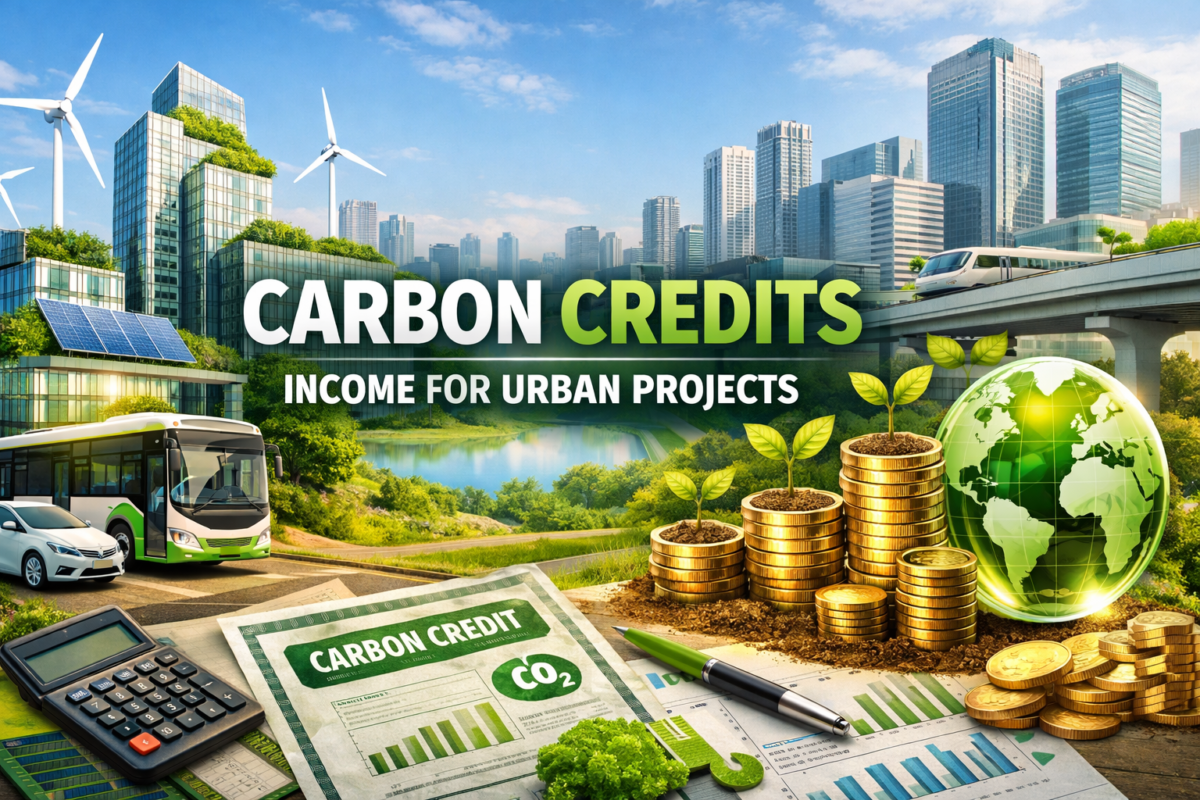
Carbon Credits Income for Urban Projects
Carbon Credits Income for Urban Projects
The idea of carbon credits has changed in recent years from being a specialized environmental mechanism to a substantial financial instrument that can help cities all over the world. metropolitan projects are increasingly using carbon credits to create sustainable revenue while encouraging green development as metropolitan areas continue to grow and confront more pressing environmental issues. This twofold benefit—economic gain and environmental enhancement—is revolutionizing urban design and opening up new avenues for investments that are climate-conscious.

Comprehending Carbon Credits
The right to emit one metric ton of carbon dioxide or an equivalent quantity of other greenhouse gases is represented by a carbon credit. Businesses or organizations that need to offset their carbon impact can purchase these credits from entities that cut emissions above the required limits. This strategy allows for flexibility in how environmental targets are met while providing incentives for emission reductions.
Carbon credits provide towns with a concrete means of making money off of ecologically beneficial activities. Urban projects that improve carbon sequestration or lower greenhouse gas emissions can earn carbon credits, which can be used to pay for infrastructure, public services, and other sustainability projects.
Urban Project Types That Qualify for Carbon Credits
Carbon credits are frequently available for urban initiatives that produce quantifiable environmental benefits. Among the important categories are:
- Green spaces and urban forestry
In addition to being aesthetically beautiful, urban forests, green belt development, and tree planting are all good for the environment. Trees enhance air quality, lower urban heat islands, and sequester carbon dioxide. Ecological advantages can be converted into carbon revenue through projects like urban afforestation, which can earn carbon credits based on the quantity of carbon collected by trees over time.
- Initiatives for Renewable Energy
Cities can lessen their reliance on fossil fuels by installing solar panels, wind turbines, and small-scale renewable energy systems in public buildings or urban districts. According to renewable energy requirements, these projects reduce greenhouse gas emissions and can be eligible for carbon credits. Municipalities can reinvest the money they earn from carbon credits to increase access to renewable energy sources and other environmental initiatives.
- Recycling and Waste Management Initiatives
Methane emissions from landfills are decreased by efficient urban waste management, which includes recycling programs, composting, and waste-to-energy systems. Carbon credits are available for projects that considerably reduce the release of methane, a powerful greenhouse gas. This strategy encourages cleaner, more sustainable urban settings in addition to opening up options for urban carbon finance.
How Carbon Credits Can Be Profited from Urban Projects?
The process of creating carbon credits is just the beginning. For cities and developers to successfully market these credits, a methodical procedure must be followed:
- Project Registration: To make sure the urban project satisfies qualifying requirements, it must be registered with an established carbon standards agency.
- Baseline Assessment: To calculate the emission reductions attained, experts measure the emissions that would have happened in the absence of the project.
- Monitoring and Verification: The accuracy and legitimacy of emission reduction claims are guaranteed by ongoing monitoring and third-party verification.
- Carbon Credit Issuance: Verified reductions are turned into tradable assets called carbon credits.
- Trading and Revenue Generation: Urban projects can profit from the sale of carbon credits in voluntary or compliant markets.
Carbon Credits’ Economic Advantages for Urban Projects
Urban planners are growing more and more drawn to the financial incentives offered by carbon credits. Among the main advantages are:
- Diversified Revenue Streams: Environmental projects that formerly only drew funding from the government can now bring in money for cities.
- Attracting Green Investments: Investors that are engaged in climate action and ESG (Environmental, Social, and Governance) standards are drawn to companies that exhibit a dedication to sustainability.
- Cost Savings: Municipal operational expenses can be decreased by energy-efficient initiatives financed by carbon credit sales.
- Employment Creation: Projects promoting urban sustainability, such the creation of green spaces or the installation of renewable energy, generate jobs.
In actuality, carbon credits support both environmental sustainability and urban areas’ economic resiliency.
Obstacles and Things to Think About
Even if there are many advantages, obtaining carbon credits presents some difficulties for urban projects:
- Complicated Regulatory Procedures: Resources and experience are needed for registration, verification, and compliance.
- Market Volatility: Changes in supply, demand, and policy affect the price of carbon credits.
- Long-Term Commitment: To guarantee continuous carbon sequestration, projects like afforestation need to be monitored over an extended period of time.
- Data Accuracy: Verifying carbon credits requires thorough reporting and monitoring, which can require a lot of resources.
Working together with environmental consultants, carbon financing specialists, and technology suppliers can help overcome these obstacles and optimize financial and environmental benefits.
Carbon Credits’ Future in Urban Development
Urban planners are increasingly seeing carbon credits as a strategic instrument for sustainable development as climate change puts increasing pressure on cities throughout the world. It is anticipated that carbon funding for urban projects will increase dramatically as
- Climate Policies Tighten: Demand for carbon credits is rising as governments establish more stringent emission reduction goals.
- Private Sector Involvement Rises: Businesses seeking to reduce emissions search for urban carbon credit initiatives.
- Technological Developments Enhance Monitoring: IoT sensors, satellite data, and artificial intelligence (AI) increase the accuracy of verification while lowering expenses.
- Growing Green Bonds and Climate Finance: Urban initiatives can obtain more funding by utilizing the proceeds from carbon credits.
In conclusion: Carbon Credits Income for Urban Projects
The idea of using carbon credits to fund urban initiatives offers towns all around the world a revolutionary opportunity. Municipalities can finance vital sustainability projects, upgrade infrastructure, and establish healthier urban environments by making money off of carbon reductions. There is a lot of opportunity to make money while encouraging environmental stewardship, from urban forestry to renewable energy initiatives, waste management, and energy efficiency improvements.
Cities that take proactive measures now will establish themselves as leaders in green urban development as the demand for carbon credits rises in both voluntary and compliance markets. Urban sustainability’s future depends on converting environmental stewardship into observable financial gains, proving that climate action and economic expansion can coexist.
Carbon Credit Trading for Climate Action: India’s Path to Net Zero and Sustainable Growth
Carbon Credit Trading for Climate Action: India’s Path to Net Zero and Sustainable Growth
2 Comments