
 Aksh
Aksh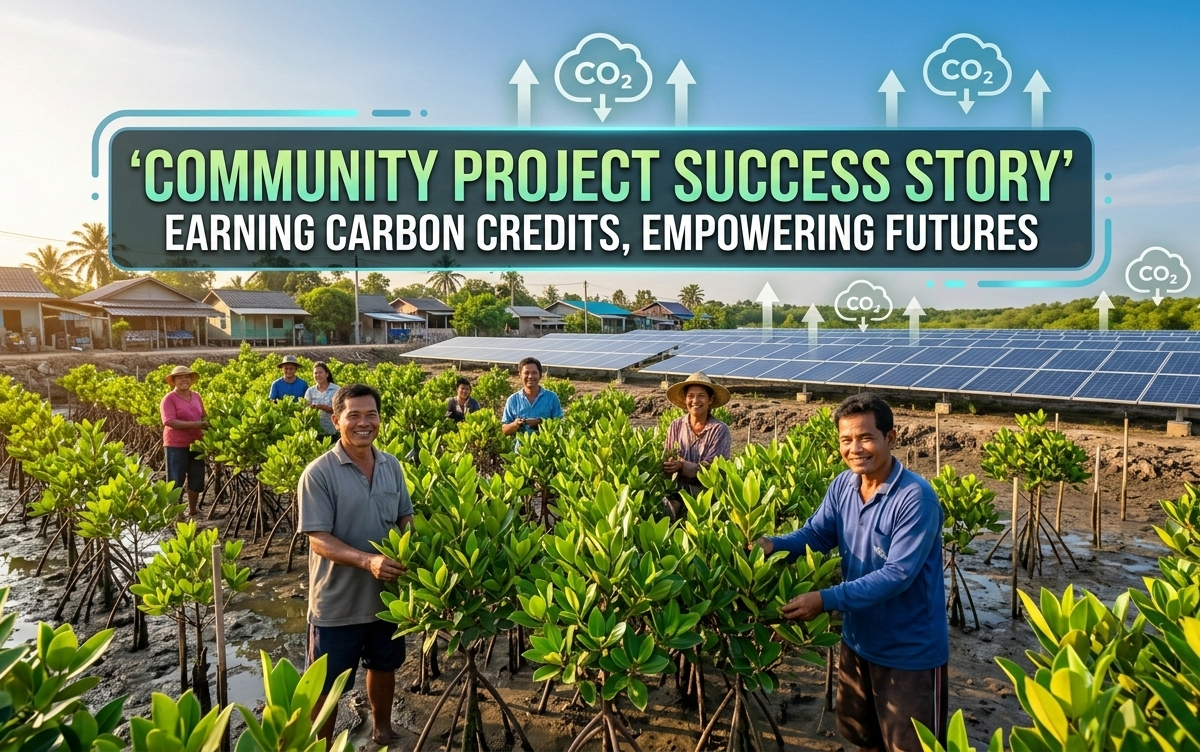
Community Led Carbon Credit Project Success
Community Led Carbon Credit Project Success
Overview
A rural area in India has become a model of success for community-based carbon credit programs in an amazing demonstration of sustainable development, environmental ingenuity, and community resilience. This success story shows how communities may be empowered, livelihoods can be improved, and quantifiable climate benefits can be achieved through planned carbon credit implementation, ecological stewardship, and collaborative action. Community carbon credit initiatives like this one highlight how local solutions can support global climate goals as carbon markets grow internationally.
The story of a community initiative that used carbon credits to improve socioeconomic outcomes, change environmental behaviors, and increase climate resilience is detailed in this article. For stakeholders, legislators, and practitioners interested in carbon markets, community-led environmental initiatives, and sustainable development, it provides a thorough model.

Context: The Inception of a Community Carbon Credit Program
- From Difficulties to Solutions
Degraded landscapes, declining soil health, restricted access to sustainable farming methods, and economic vulnerabilities linked to climatic unpredictability were all common issues encountered by the area at the center of this story, which is representative of many rural areas in India. Social and environmental stress was brought on by lower agricultural yield, frequent droughts, and soil erosion.
Local officials, community organizations, and sustainability advocates collaborated to investigate novel strategies that may tackle both ecological and economic issues after realizing the need for integrated solutions. They discovered a good idea as a result of their investigation: carbon credits.
- The Vision Emerges
This town started the planning process to create a carbon credit project with the help of environmental organizations and technical professionals. The objective was unambiguous: establish a community-based project that would:
- Build soil carbon and repair damaged landscapes.
- Boost the sustainability of agriculture
- Produce carbon credits by taking measurable climate action.
- Give farmers and households socioeconomic advantages
- Increase climate resilience throughout time
Local empowerment—a project created by and for community members, guaranteeing ownership, relevance, and sustainability—was the foundation of the community’s vision.
Building Capacity and Involving the Community
- Encouraging Local Stakeholders and Farmers
This initiative’s focus on capacity building was among its most influential features. To make sure that community members were aware of the science and financial potential of carbon credits, the project organizers placed a high priority on education and training.
Topics covered in workshops and outdoor demonstrations included:
- Fundamentals of sequestering carbon in soil
- Practices for integrated land management
- Fundamentals of carbon verification and accounting
- Opportunities in the carbon credit market
- Knowledge of finance in relation to carbon credit income
Community members developed a sense of ownership as a result of these capacity-building initiatives. Instead of being passive recipients, farmers started to actively participate in decision-making and implementation.
Environmental Effects: Quantifiable Advantages of Climate Change
- Sequestration of Carbon and Reduction of Emissions
The project recorded notable environmental improvements within its first three years of operation:
- Increases in soil carbon: Regenerative farming methods raised the amount of organic carbon in the soil on all participating farms.
- Increased carbon sequestration and improved local biodiversity were two benefits of expanding the forest and tree cover through the planting of new trees through agroforestry and reforestation initiatives.
- Reduction in emissions from agricultural inputs: Less reliance on synthetic inputs resulted in lower energy consumption and emissions from transportation and manufacturing.
The program produced measurable carbon benefits through professional verification and community-generated data, allowing the issuing of validated carbon credits.
Difficulties and Acquired Knowledge
- First Reluctance and Information Deficits
Due to their lack of knowledge about carbon markets and climate science, many community members first had doubts about the idea of carbon credits. Building trust and engagement required intensive instruction and open communication.
- Barriers to Data Collection and Verification
There were technological difficulties in ensuring precise carbon measurement. Through relationships with technical advisers who offered tools, training, and verification frameworks appropriate for community contexts, as well as participatory monitoring mechanisms, the initiative overcome these obstacles.
- Ensuring Fair Distribution of Benefits
Careful governance design was necessary to allay worries about the equitable distribution of carbon credit revenue. Through extensive community consultations, benefit-sharing agreements were created, guaranteeing an equitable and transparent distribution of proceeds.
Scaling Impact: How This Initiative Promotes Wider Change
- Possibility of Replication Throughout India
Replication attempts in other regions of India have been sparked by the community carbon credit project’s success. Governmental organizations, private climate investors, and development groups are realizing the need of community-driven approaches that put sustainability, local context, and empowerment first.
These initiatives can significantly contribute to India’s climate plan by:
- Supporting national pledges to reduce carbon emissions
- Improving resilience and adaptation in rural areas
- Using sustainable methods to provide job possibilities
- Enhancing natural resource management in the community
- Support for National and International Climate Goals
Community carbon credit programs are in line with national climate obligations and the larger objectives of the Paris Agreement from a policy standpoint. They represent a bottom-up strategy for mitigating climate change that combines localized action with broad policy frameworks.
The Significance of This Achievement Story
A compelling reality is brought to light by this community carbon credit success story: sustainable development works best when local expertise, environmental stewardship, and economic opportunity are interwoven. It shows that taking action on climate change doesn’t have to be abstract or far away; communities can drive revolutionary change if they are given the resources, education, and opportunities to profit from environmental stewardship.
This narrative provides readers, practitioners, and policymakers with:
- A guide for neighborhood-based carbon credit initiatives
- An understanding of how to overcome implementation obstacles
- Proof of environmental and socioeconomic benefits
- Motivation for expanding climate solutions rooted in the community
In conclusion: Community Led Carbon Credit Project Success
This community carbon credit initiative is a powerful illustration of what can happen when people unite around a common goal of prosperity, resilience, and sustainability. It demonstrates how communities that have historically been at the forefront of climate vulnerability can benefit economically from local, significant, and meaningful climate action.
Stories like this serve as a reminder that genuine progress necessitates creative solutions that prioritize people, the environment, and prosperity as the globe continues to step up efforts to mitigate climate change.