
 Aksh
Aksh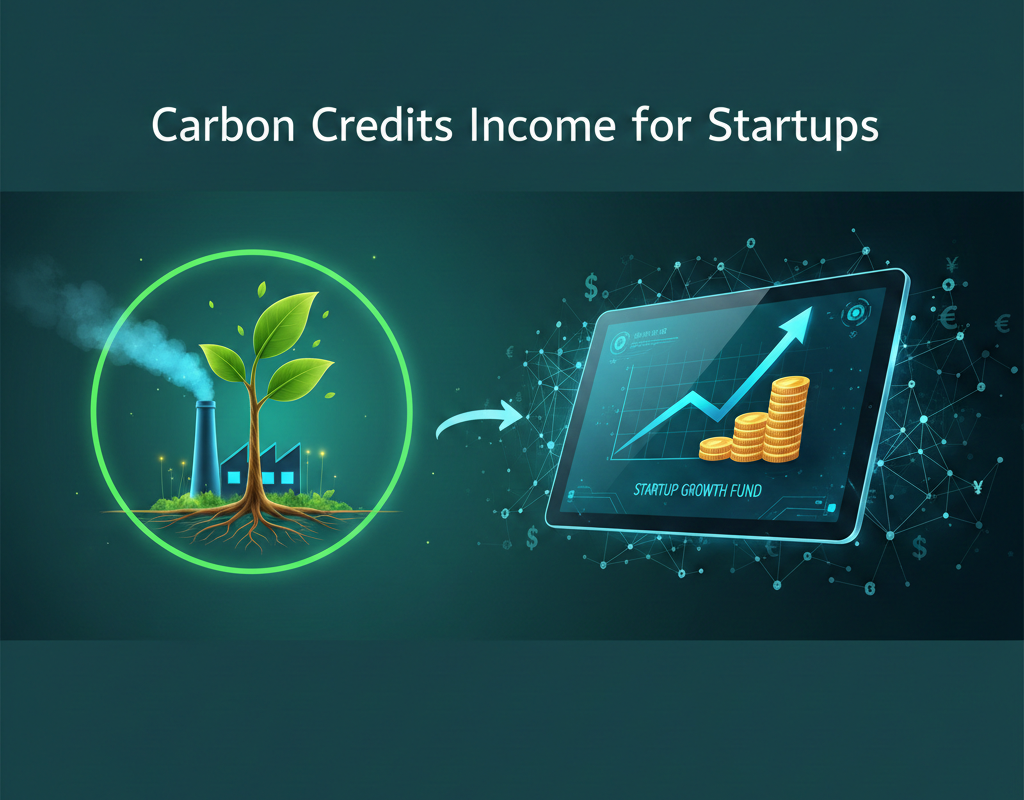
Carbon Credits Income for Startups
Carbon Credits Income for Startups
Industries, investment trends, and entrepreneurial prospects are all changing as a result of the worldwide movement toward decarbonization. Carbon credits are one of the most promising and untapped revenue streams for Indian entrepreneurs. Credible carbon offsets are in high demand as climate restrictions tighten and businesses pledge to achieve net-zero emissions. This change has produced a flourishing ecosystem in which creative entrepreneurs can make significant profits while promoting environmental sustainability.
One of the biggest rising economies in the world, India is leading the way in the development of the carbon market and climate action. There are several ways for entrepreneurs to generate revenue through carbon credits as renewable energy, waste-to-energy innovation, sustainable agriculture, electric mobility, and green manufacturing gain traction.

Comprehending Carbon Markets and Carbon Credits
One metric ton of carbon dioxide (CO₂) or an equivalent greenhouse gas that is avoided, decreased, or eliminated from the atmosphere is represented by a carbon credit. Businesses, groups, or governments who need to offset their emissions can purchase these credits.
Two main categories of carbon markets exist:
- The Carbon Market for Compliance
Regulated by systems that mandate that businesses set emissions limits.
- Market for Voluntary Carbon
Businesses voluntarily buy carbon credits to fulfill net-zero pledges or ESG targets.
While compliance markets are growing in tandem with regulatory advancements, the voluntary carbon market now provides the most accessible entry point for Indian companies.
Why Income from Carbon Credits Changes Everything for Startups?
- An Extra Source of Income
Beyond the conventional sales of goods or services, carbon credits generate a supplementary revenue stream.
- Attracting Investors
Impact investors and venture capitalists with an emphasis on ESG find climate-aligned enterprises very appealing.
- Better Appraisal
Carbon-positive measures raise a company’s value and brand equity.
- Alignment with the Government
India’s climate policies encourage involvement in the carbon market and green innovation.
- An edge over competitors
Early adopters of carbon monetization gain the trust and long-term agreements of buyers around the world.
India’s High-Prospect Sectors for Carbon Credit Revenue
Startups in a variety of industries can make money from carbon credits:
- Startups in Renewable Energy
Measureable emission reductions are produced when fossil fuel-based electricity is replaced with solar, wind, hydro, and biomass projects.
- The Circular Economy and Waste Management
Greenhouse gas emissions are greatly decreased via methane capture, composting, recycling technologies, and waste-to-energy facilities.
- Infrastructure for Electric Vehicles
Transportation emissions are decreased by EV fleet management, charging networks, and battery swapping stations.
- Agroforestry and Sustainable Agriculture
Initiatives like tree planting, regenerative agriculture, and soil carbon sequestration are eligible for carbon credit programs.
Models of Revenue for New Businesses
- Sales of Direct Credit
Directly sell carbon credits to businesses.
- Extended Offtake Contracts
At the agreed-upon price, secure forward contracts with purchasers.
- Platforms for Carbon Aggregation
Join forces with online marketplaces that sell bundled credits.
- Services for Integrated Sustainability
Provide offset credits along with carbon-neutral products.
- Solutions for SaaS Carbon Accounting
Provide software for tracking emissions and make money by facilitating credit.
Obstacles New Businesses Face
Carbon credit revenue has drawbacks despite its potential:
- Uncertainty in Regulation
Frameworks for policies are changing, thus they need to be continuously observed.
- The volatility of the market
Global demand determines changes in credit prices.
- Complexity of Verification
The standards for audits and documentation can be strict.
- Examining quality
High-integrity credits are becoming more and more in demand.
These hazards are reduced by proactive compliance and openness.
In conclusion: Carbon Credits Income for Startups
Income from carbon credits offers Indian companies a game-changing possibility. As the market for verified carbon offsets increases both domestically and internationally, creative companies can create impact-driven, scalable, and sustainable income models.
Startups in a variety of industries can access carbon markets, from waste management and renewable energy to sustainable agriculture and electric vehicles. Entrepreneurs can promote climate resilience and unlock long-term growth by comprehending regulatory frameworks, monetization tactics, and verification standards.
This is the perfect time for companies to incorporate carbon credit monetization into their business plan because of India’s changing carbon market ecology, growing ESG investments, and corporate sustainability pledges.
Carbon Credit Trading Tips for Beginners: A Complete Guide to Profitable and Ethical Carbon Markets
Carbon Credit Trading Tips for Beginners: A Complete Guide to Profitable and Ethical Carbon Markets
4 Comments